
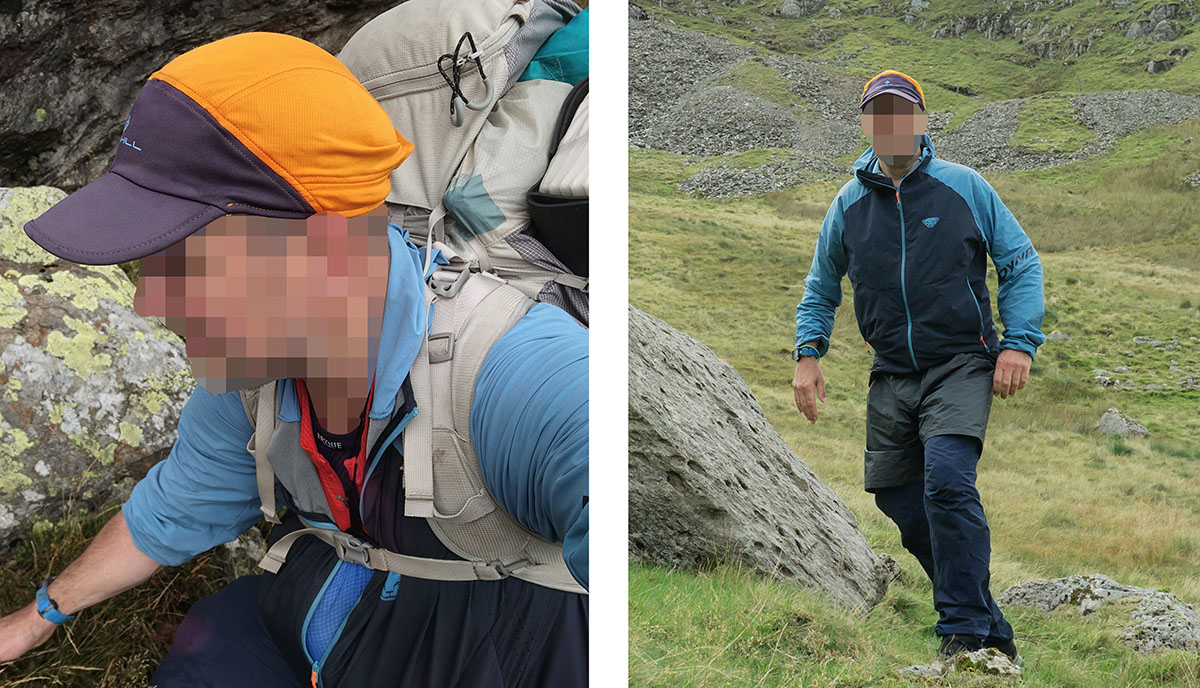
Dynafit's Transalper Dynastretch Jacket
Special Mentions
Over time we've come across a number items that have really impressed us and we'd like to draw attention to, but ...
- either they don't quite fit into our rather strictly defined / narrow categories, or
- they are, or are highly likely to be, our top-rated recommendations, but may require some more testing, or
- due to their high price-point, they cannot compete with our existing recommendations (mainly on the value score), or
- they will become our top choice, but only if and when our existing recommendation becomes unavailable (i.e. this item is the current heir in waiting but is just marginally edged out by our current recommendation).
So for such items we've created "special mentions" (SM). These "reviews" don't get a rating score and may receive less in-depth coverage and don't feature in our catalogue, instead the SM write-ups fall somewhere between a post and a formal review. They are identified by a blue Scramble mountain logo.
Intros out of the way, we'll proceed with our look at Dynafit's Transalper Dynastretch Jacket, and as always, we'll be looking at it from the point of view of long distance trekking over tough terrain.
Test subject: Chest 42", Waist 33", Height: 5ft 8"
Test item: Size = Extra Large
Kit Tests: Summer, (Winter Upcoming)
Disclaimer: None required (item not provided by manufacturer)
Datasheet
| Materials (Upper, Light Blue): Dynanylon 4-Way (Nylon / Elastane) | 84% / 16% |
| Materials (Torso, Dark Blue): Dynastretch Dots (Nylon / Elastane / Polyester) | 64% / 21% / 14% |
| Materials (Back Mesh): Air Mesh 140 (Polyester / Elastane) | 77% / 23% |
| Materials (Pocket Lining): Warpknit Mesh Polygiene (90g/sm Recycled Polyester) | 100% |
| Treatments: PFAS Free DWR | - |
| Weight (Size not indicated, stated / XL measured) | 265g / 282g |
| Product Sizing Reference: 42" Chest (Regular Fit)= | XL |
| Manufacturer RRP | £145.00 |
Scramble Review
Contents
- Introduction
- A Quick Note On Sizing
- Overview & Materials
- Features
- Compared to Rab's Borealis
- Latest Version Appears To Negate Our Concerns
- Any Negatives?
- Conclusion & Product Images
Introduction: Dynafit's Border Crossing
Note: Dynafit has released a new version of the Transalper. The points we've raised regarding the mesh back panel, the hood and main zip have all been addressed in the latest release.
If you're unfamilair with Dynafit, they began in Austria in the 1950s making ski boots. In 2003 they joined the Oberalp Group, a family-owned business based in Bolzano (just across the border in South Tyrol), Italy, which also owns Salewa and Wild Country. In our view, the border crossing cannot have had any significant impact on standards (unless positive). Today, Dynafit produce some very high quality garments; often on a par with the best of Mountain Equipment and sometimes perhaps superior. Unless you shop around and get lucky (or are willing to be patient before swooping on special offers which can be significant), you'll likely pay a premium for Dynafit apparel, but clever design, quality materials and excellent finishing all come at a price.
 Dynafit's Transalper Dynastretch is a classic softshell that utilises a number of technical fabrics.
Dynafit's Transalper Dynastretch Jacket (we'll refer to it simply as the Transalper from now on) is a rather traditional softshell. In fact, Rab's latest Borealis offering (the 2025 Borealis Hooded Jacket), at least in terms of its feature-set, is quite the doppleganger; a full-zipped, nylon-based, hooded softshell jacket, with two hand pockets (as pictured below).
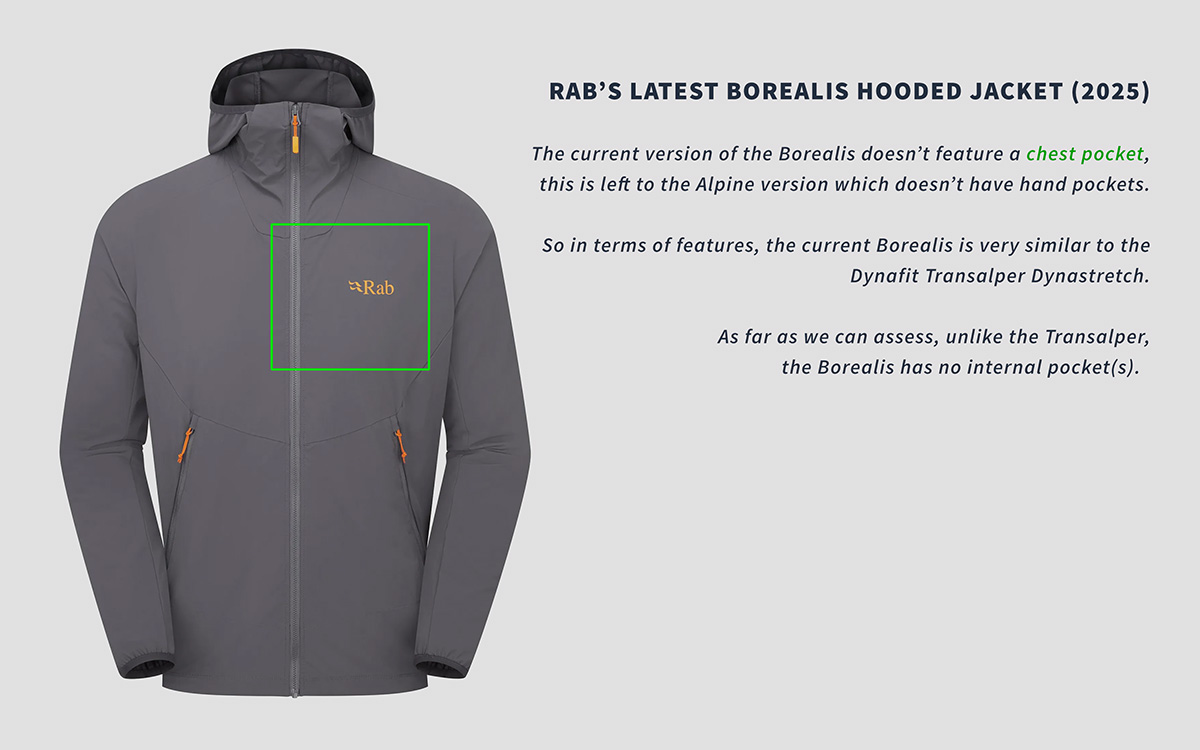 Rab's latest Borealis Jacket has the same focused design and feature-set.
What makes the Transalper different and a little more sophisticated is the combination of technical fabrics employed, each with a clearly defined purpose. But before we get into that ...
A Quick Note On Sizing
Depending on how you look at it, Dynafit either size small, or perhaps more likely make apparel that is designed to be form-fitting. Their target audience is comprised of mountain runners, fast-moving Alpinists and ski touring mountaineers, whom they collectively refer to as fast moving mountain endurance athletes. I hope they don't mind us crashing their party.
When you look at the models used to exhibit their gear, they tend to be wiry and slender, muscular but lightly built. I could have squeezed into the Transalper in a size large, in fact we purchased a number of Dynafit items including the Transalper Vest (the hooded gilet version of the item under review here) and the size L fits me (partly due to the stretch) but it's a close, slim fit (fine for a supplemental layer). However, when it comes to an outer softshell jacket, I prefer a regular, looser fit, as I'm often stuffing things like map bags down inside it. I found the fit of the XL Transalper ideal and pretty much the same as Rab's Borealis in a size L.
Overview & Materials
Two aspects of the Transalper are immediately apparent as soon it's donned. The first and most obvious (and given away in its "Dynastretch" name) is its stretchiness. It's not over-the-top stretchy, in fact it's quite similar to Rab's Borealis, but its 4-way stretch allows the jacket to be worn as a figure hugging option with sufficient flex to operate unhindered on the rocks. Rab's Matrix Single Weave softshell used throughout the Borealis is an 85% / 15% mix of (tough) nylon and (stretchy) elastane; the Transalper's hood, shoulders and arms (all the parts likely to get roughed up by rocks, packs, picks and gear) have a similar mix, with 1% more elastane (an 84% / 16% nylon to elastane mix). The torso fabric (dark blue) has an even greater degree of stretch with 21% elastane and has a small amount (14%) of polyester in the mix, but is again largely comprised of nylon. This makes the (sized up, regular fitting) Transalper a versatile jacket for layering. If you needed to layer an insulated or waterproof jacket underneath it to protect them from the rocks or undergrowth, the Transalper can accommodate such options.
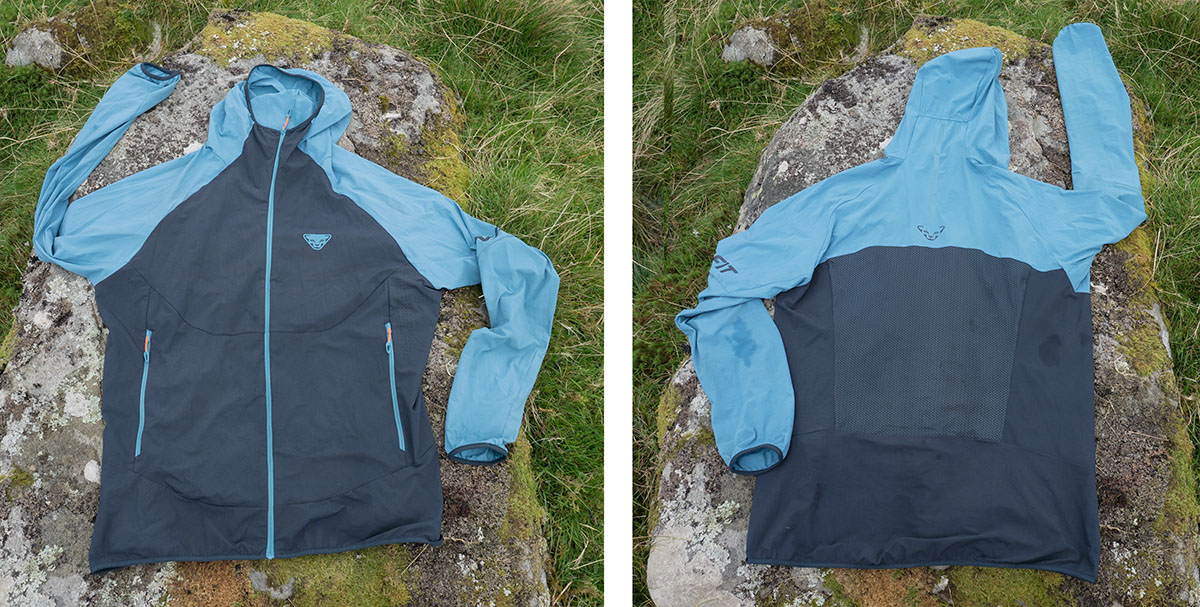 Keeping it simple: stretchy, nylon-based, 2 pockets and a hood.
The other aspect, apparent on closer inspection, that's purposefully woven into its design is breathability. Clearly Dynafit want their over-heating, fast movers to vent. There are minuscule perforations in the "Dynastretch Dots" (dark blue) torso fabric, as well as larger laser cut dots at the sides and up under the arms. Most noticeable is the large Warpknit Air Mesh venting panel on the back.
A Traditional Softshell
So, what we have here is a lightweight, traditional, hooded, full-zip softshell jacket designed to flex and breathe, whilst also providing meaningful protection from harsh winds and abrasion from rock and thorny thistle alike. It's a tricky balancing act, but one that the Transalper, like the Borealis, pulls off with some aplomb.
In terms of features, we've got:
- two zipped, roomy (and stretchy) hand pockets
- an internal "glove / smartphone" pocket
- a well fitting, non-adjustable lycra-bound hood
- lycra-binding at the cuffs and an elasticated hem
In short, a classic, traditional, lightweight softshell.
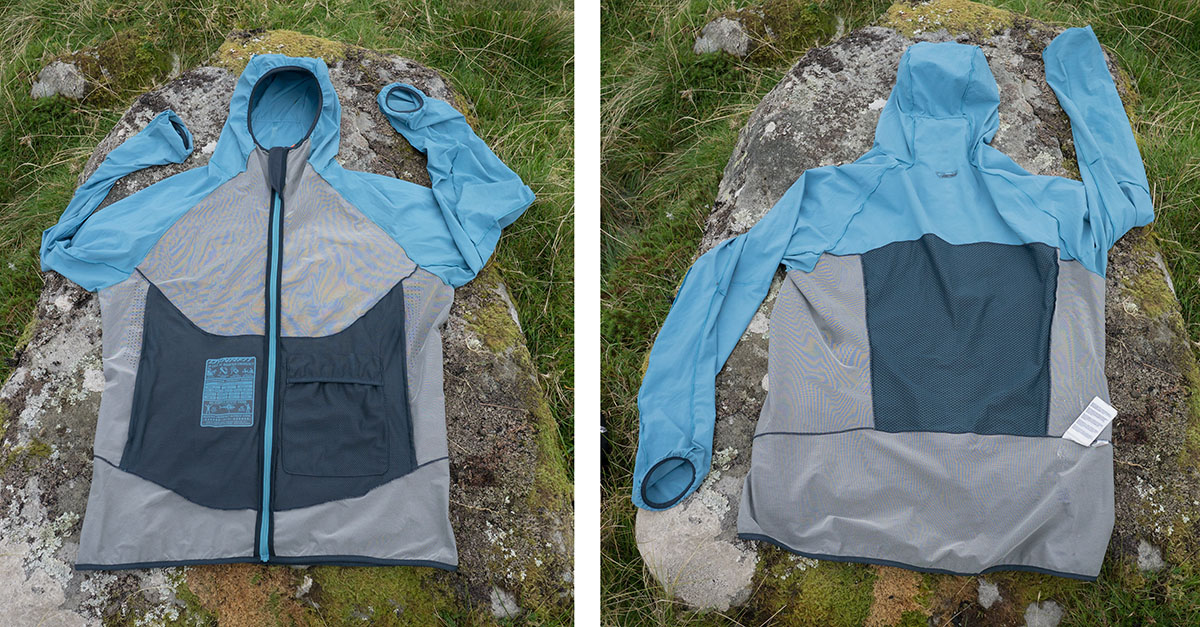 Dynafit's Transalper is an excellent example of clear-headed design.
Fabrics
Let's have a look at this back panel, which was our one concern regarding the Transalper. We were worried on two counts:
- potential for the panel's edge seams to cause chafing under a heavy pack, and
- that the mesh wouldn't be tough enough to handle the constant abrasive wear of a heavy pack's back panel when in motion for twelve hours a day.
To date, these concerns have been unwarranted. The seams around the Air Mesh panel are low profile and went completely unnoticed and though it's too early to be definitive, I've seen no evidence of wear on the mesh panel itself.
Pictured below is a close up of the Warpknit Air Mesh 140 fabric (77% polyester / 23% elastane mix). In the close-up, the dark patches are actually semi-transparent and you're seeing through the mesh to the inner front fabric (which is dark blue). If you hold the mesh up to the light you can see through it; if you cover your mouth with it, your breathing is only restricted by about 20 or 30%, so it's very air permeable.
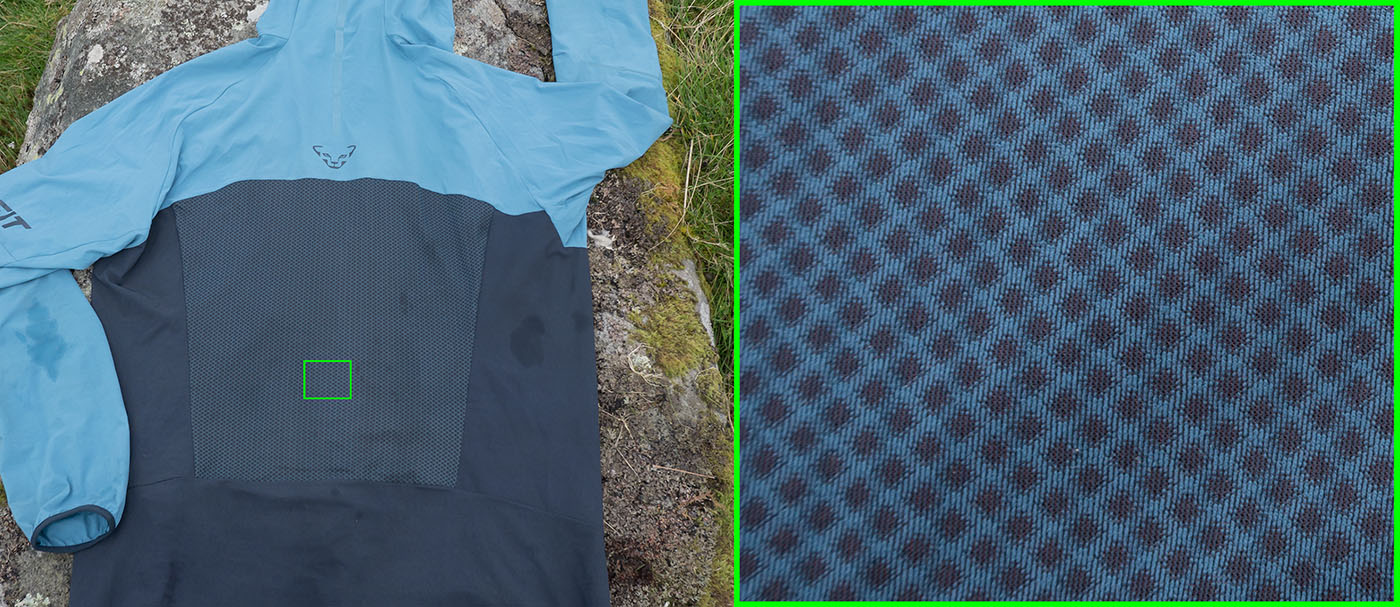 The Transalper Dynastretch features a large and highly air-permeable back venting panel.
Competition is a good thing and we like having alternatives waiting in the wings in case manufacturers (Rab in this case) mess things up (as manufacturers all too often do when they approach perfection ... like some kind of Icarus syndrome). So, we're going to focus on testing the Transalper as much as possible to see if this Air Mesh panel is a refreshing blessing or a fragile curse.
Under a heavy pack, the mesh panel isn't really acting as a vent. However, when taking a quick break with pack removed, you really do notice a nice cooling effect.
When it comes to breathability, the material that's most impressive is the Dynastretch Dots (torso) fabric (pictured below centre, with fabric inner, pictured right). It does a great job of keeping you comfortably cool when pushing hard, especially if there's a decent wind blowing.
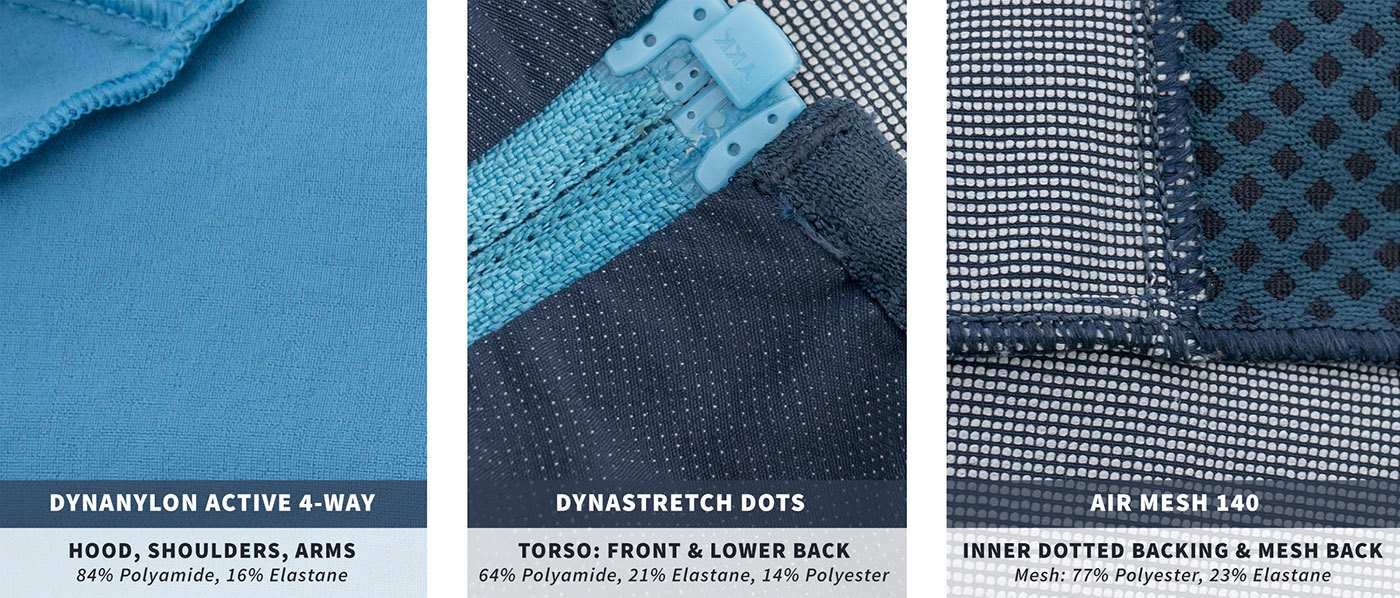 A close look the range of materials used in the Transalper Dynastretch Jacket.
Finally, pictured above left, is the toughest of the three fabrics; a 4-way stretch nylon softshell called "Dynanylon Active". Dyna this, Dyna that, but all the Dynas work very well together. Once could argue that the Transalper is over-engineered, but our feeling is that it's the product of purposeful design. Over the recent kit test, the Transalper performed superbly and we're going to see how it handles the cold early next year (in the 2026 Winter Kit Test) where it will function as an outer over a Karpos Lavaredo Jacket (XL, another brand that size small or ultra-fitted). This Karpos (inner), Dynafit (outer) combination weighs the same as Scramble's recommended pairing (pictured below right, option #2, ~600g).
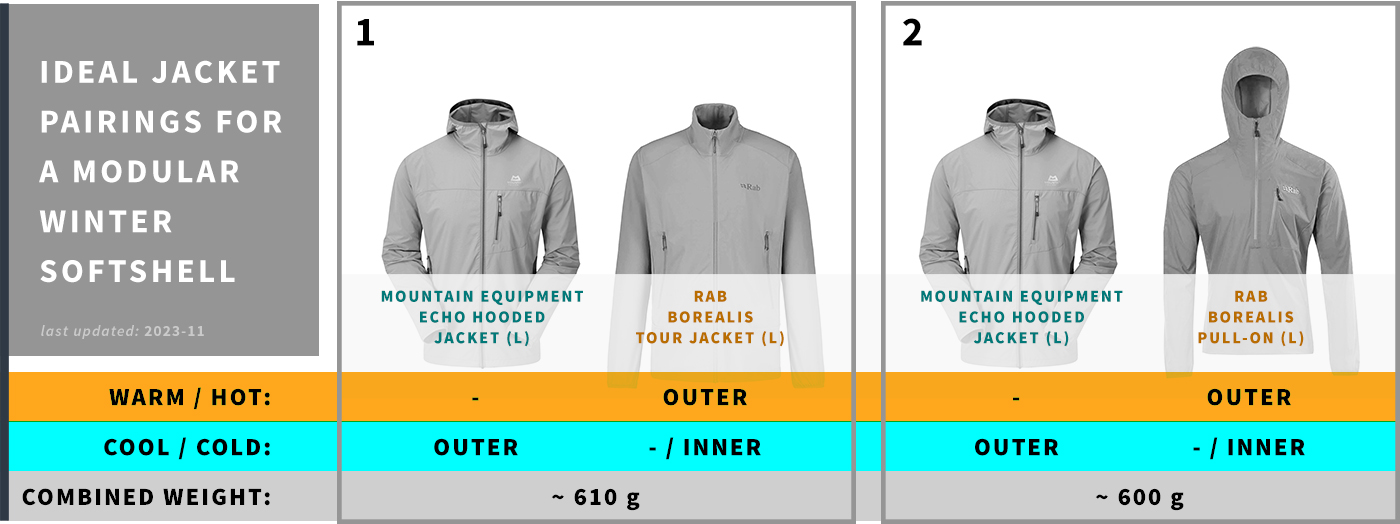 Scramble's current modular softshell recommended jacket pairings
If the Borealis range disappeared tomorrow, we'd be recommending the Transalper as a winter inner under Mountain Equipment's Echo; a one-for-one replacement for the Borealis. The Echo, though still lightweight, has a much higher nylon (94%) to elastane content which makes it a more suitable winter outer.
Features
We'll keep this brief and snappy as we take a closer look at the features of the Transalper. We'll start with the hood and work our way down. This shouldn't take too long.
The Hood
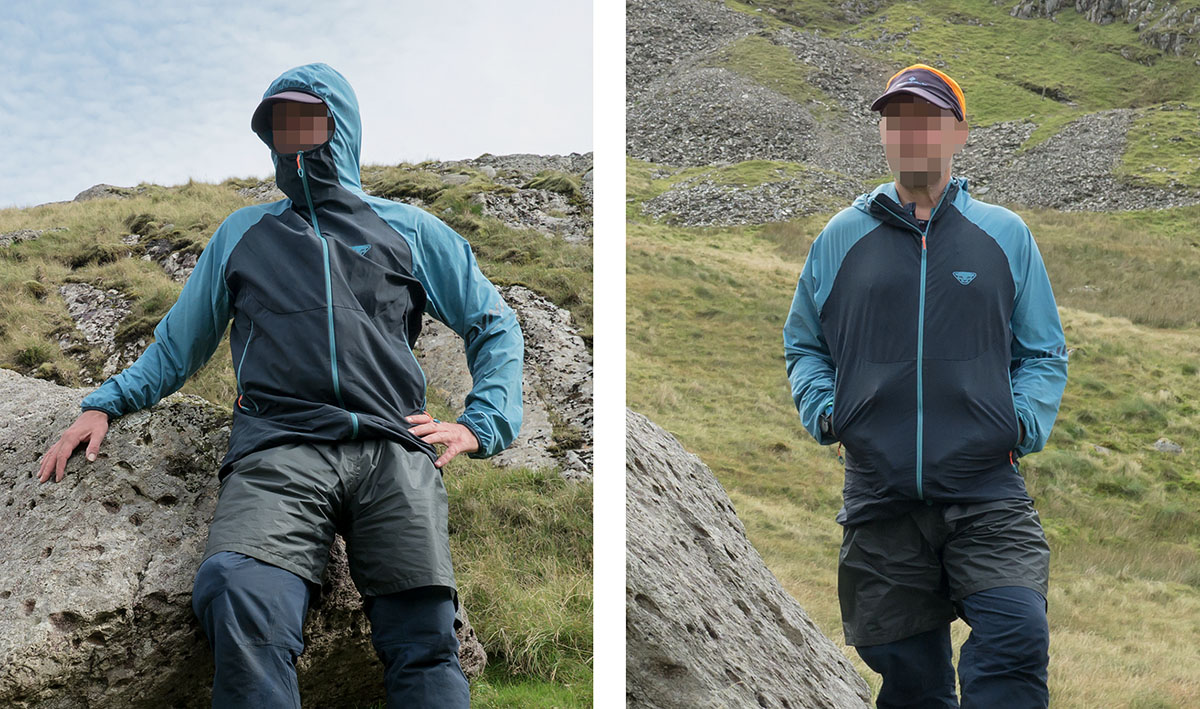
The Transalper has a standard (under-helmet), non-adjustable, lycra-bound hood which, when the jacket is fully zipped up, forms a protective cocoon, leaving only the nose and eyes exposed. Because I chose to size up, the hood on the XL Transalper has a little excess or slack at the neck, so if I wanted to (without wearing a cap), I could pull it forward and over my eyes. However, I found I could set the hood how I wanted (pulling down at the lower neck) and the hood didn't creep forward and stayed in place. Wearing a cap, none of this is an issue.
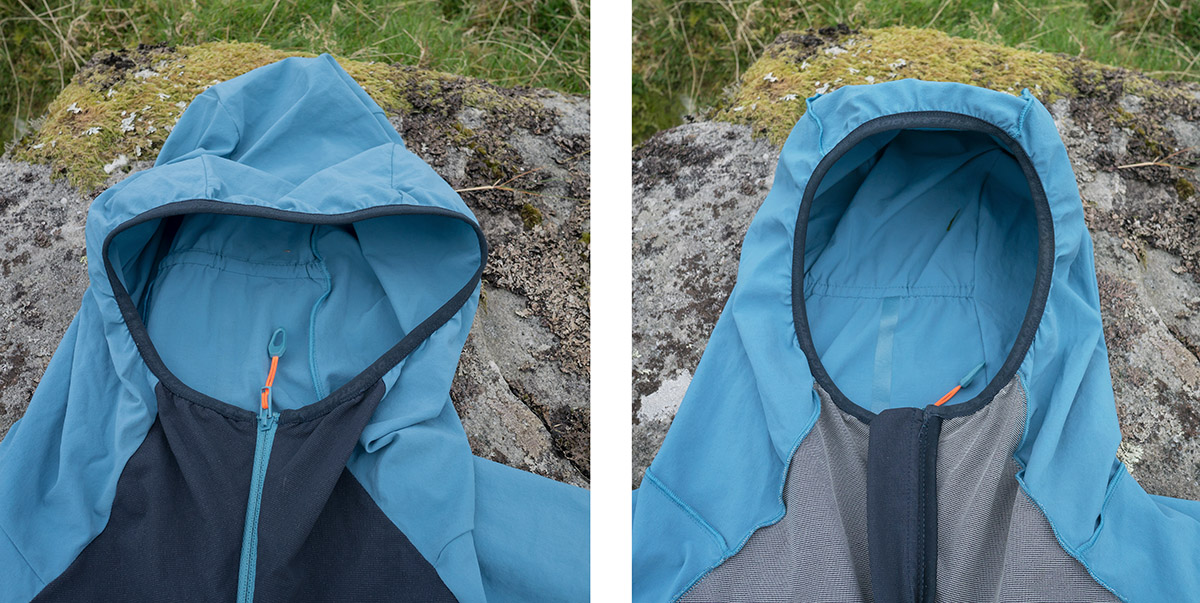 Dynafit's Transalper Dynastretch has a decent hood which has been upgraded on the latest version.
The Transalper's hood is fine, but we prefer the hoods on the Borealis and Mountain Equipment's Echo, which have a superior, closer fit. Perhaps Dynafit, targeting the alpinist, are factoring in the wearing of a warm winter beanie. If so that would explain the slightly more roomy feel of the Transalper hood. All that said, we're talking at the margins here, as you can see in the image above, the fit is not bad at all, and with a cap, a none-issue.
Pockets and Zips
The Transalper uses YKK reverse-coil zips for the main zip (pic #1 below) and the two zipped hand pockets (pic #2 below - note the laser-cut venting dots mentioned earlier which rise toward the arm pit). The zip pulls are very good; solid, ergonomic and lightweight (Dynafit jackets often come with spare sets, as this one did).
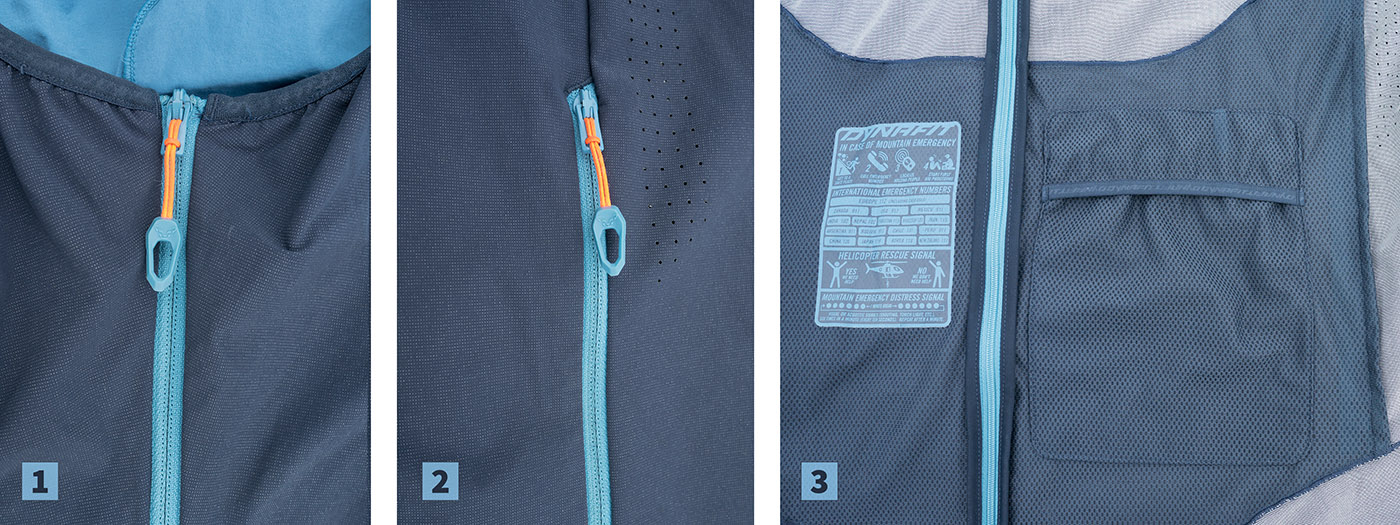 The Transalper Dynastretch Jacket has a useful, secure internal glove pocket.
The Transalper has a very useful, internal, zip-less, right-side, "glove" pocket (pic #3 above) which the Transalper packs into without any difficulty. The pocket, is of course stretchy, but has a stitched over-lap at the top (so to put stuff in it you kind of have to go up then down), so even though it has no zip or popper closure, it's pretty secure and would be fine for a smartphone.
Across the way, on the left side, is a helpful, beautifully illustrated, embedded label which informs you how to signal a mountain rescue helicopter during your own personal mountain emergency. Good stuff.
Cuffs and Hem
The cuffs are lycra-bound and have sufficient stretch to allow the user to roll up their sleeves and keep cool. At the hem is a straight-forward elasticated binding. Something we'd like to see on OMM's recently reviewed Halo Smock.
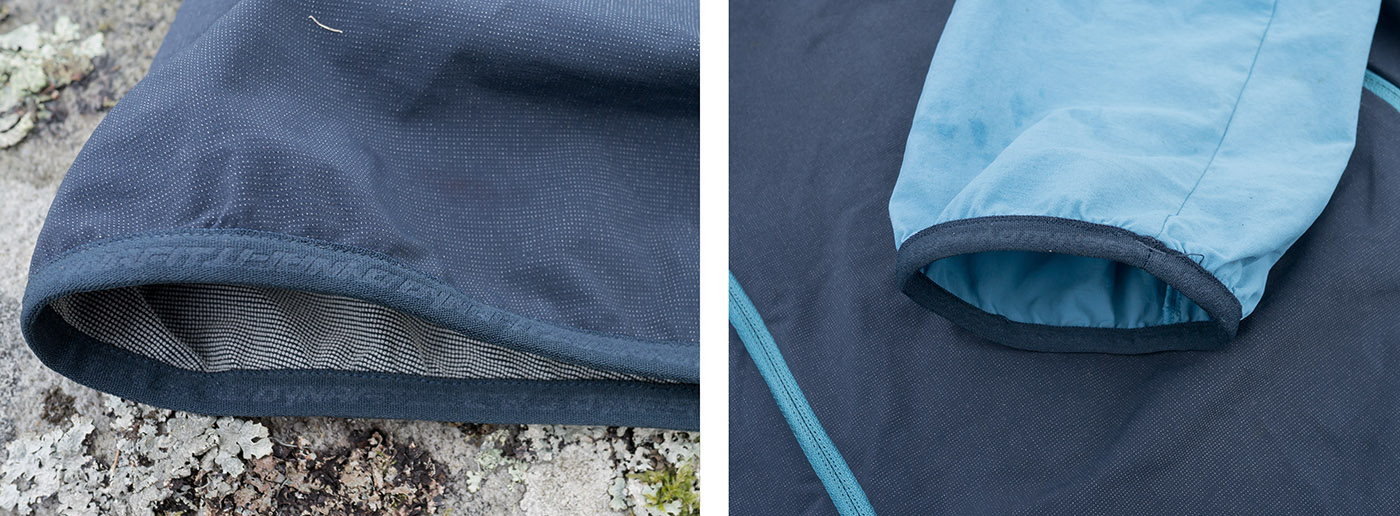 The Transalper Dynastretch Jacket has lycra-bound cuffs and elastic banding at the hem.
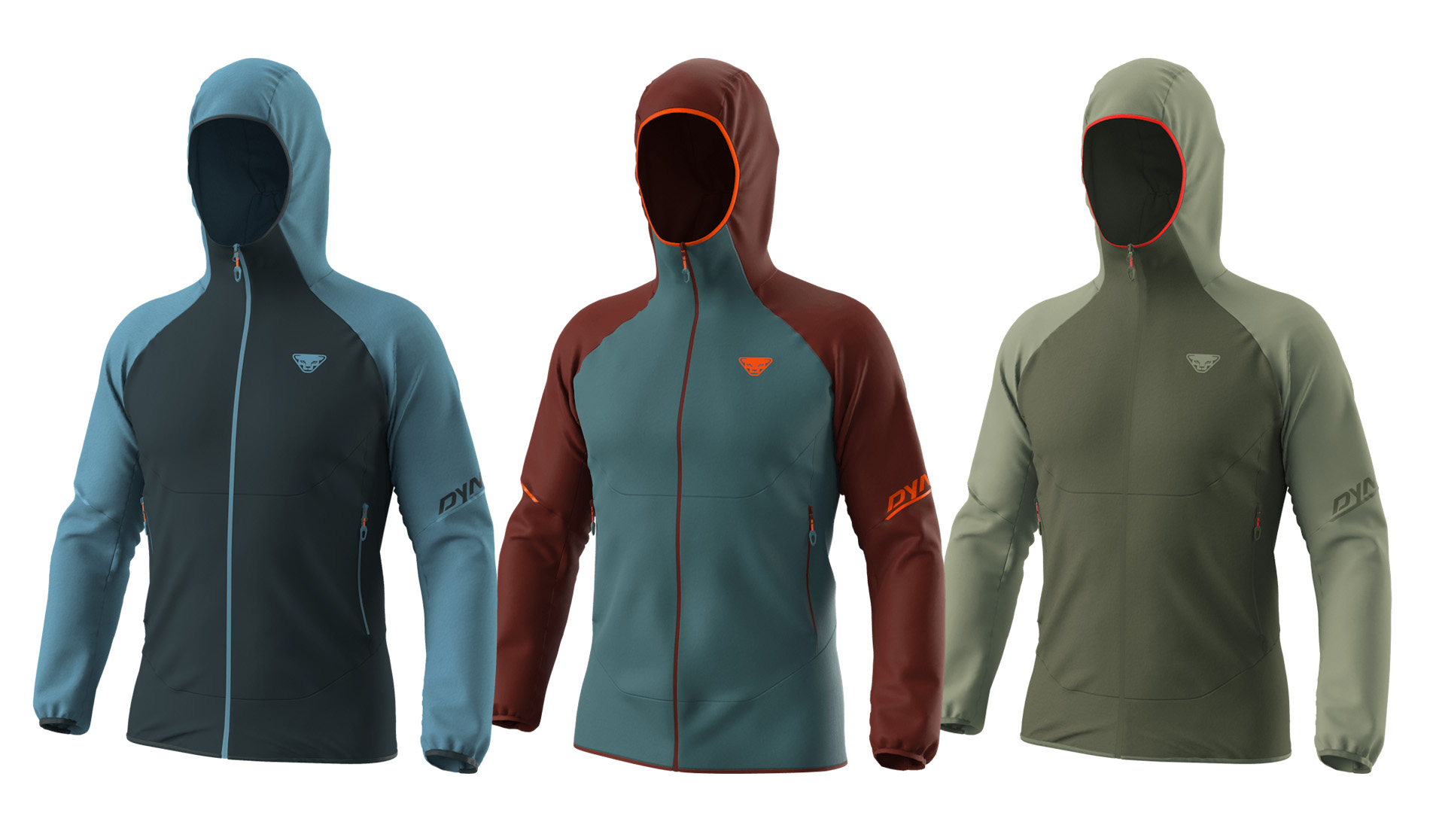
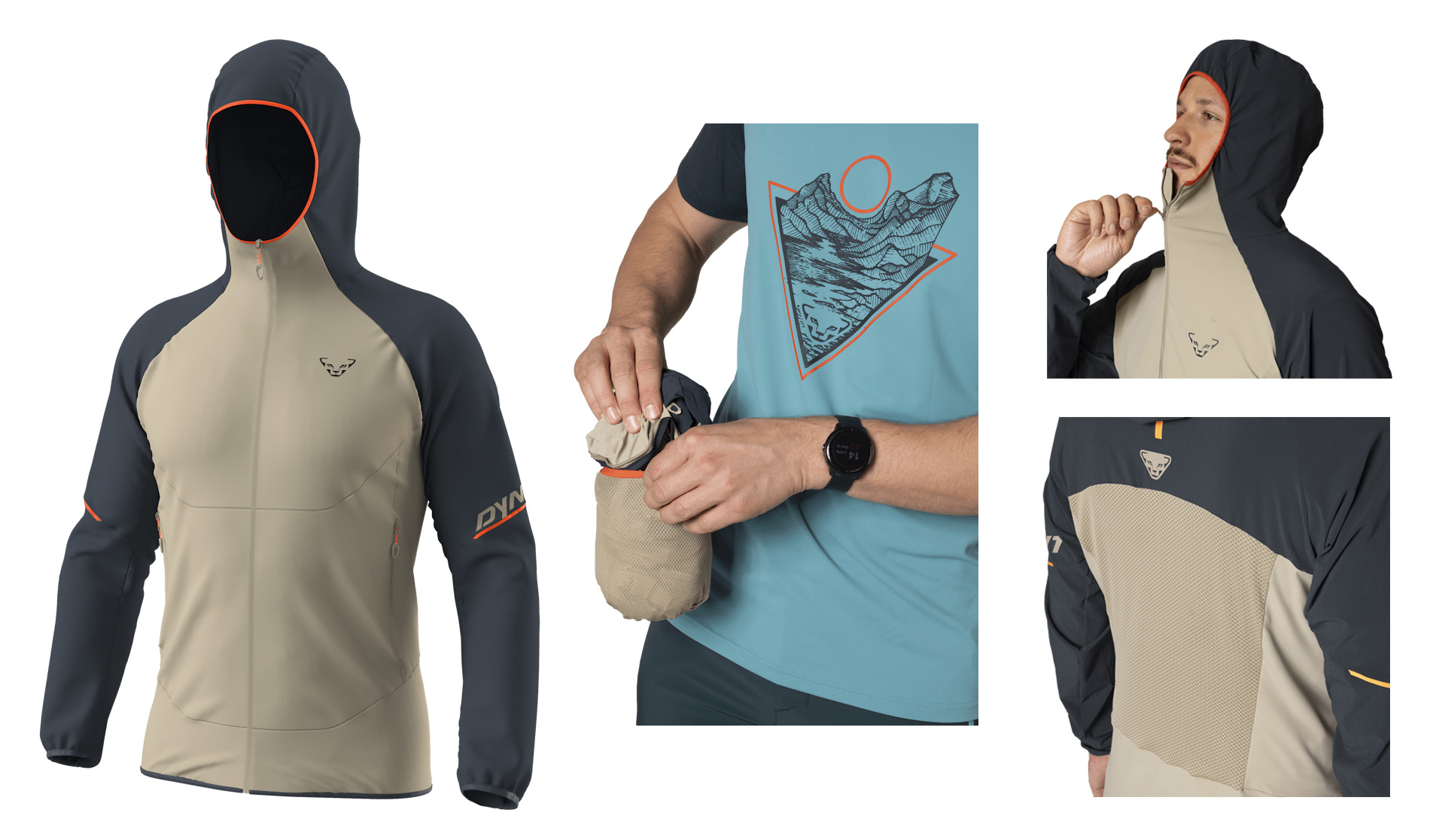
And that's pretty much it for the features. We will say just one more thing and it's superficial but worth mentioning. Dynafit (and Karpos to an extent) often offer their big sellers in a wide and often tasteful array of colour combinations. At the time of writing there are ten colour schemes available for the Transalper. In the product gallery below, we've featured just four. So, if you care how you look when no one else does, Dynafit have almost certainly got you covered. I won't lie, given a choice, I do have my preferences.
Compared to Our Current Pick: Rab's Borealis
Rab's Borealis had three things over the Transalper, but since Dynafit''s upgrade we're down to just one: the cost.
The Transalper's reverse coil YKK zips are perfectly fine, but we prefer the YKK vislon zips used on the Borealis (and ME's Echo).Solved in the latest version (see image below, left).The hood on the Borealis is pretty much perfection and is a little more fitted. We don't think this is just a sizing-up issue, as the Transalper Dynatretch Vest also a hood and, in a size large, is also a little capacious when compared to the Borealis.May be solved in the latest version (see image below, right).- Price. The RRP of the Borealis is £85 and for the Transalper, £145.
If price wasn't a factor, the Dynafit Transalper (and certainly the latest version) would edge it, but not by a country mile - which shows just how good the Borealis is. We're going to keep testing the Transalper and see if we can't break it. Our only concern is with the durability of the mesh back panel (not an issue in the latest release), but so far it's warranted no such concern.
Latest Version Appears To Negate Our Concerns
The latest version appears to have switched out the reverse coil zips for YKK Vislon zips. So, that's no longer an issue. Furthermore, we don't need to worry about the durability of the Air Mesh panel, since they've removed it and have replaced the panel with an array of laser-cut venting holes / dots (pictured below, centre). Also, the hood now seems to have a reinforced peak (below right), so the hood issue may well also have been remedied. We only just saw this before publishing our review (Dynafit have both versions live and for sale on their site and we just saw what must be the new release).
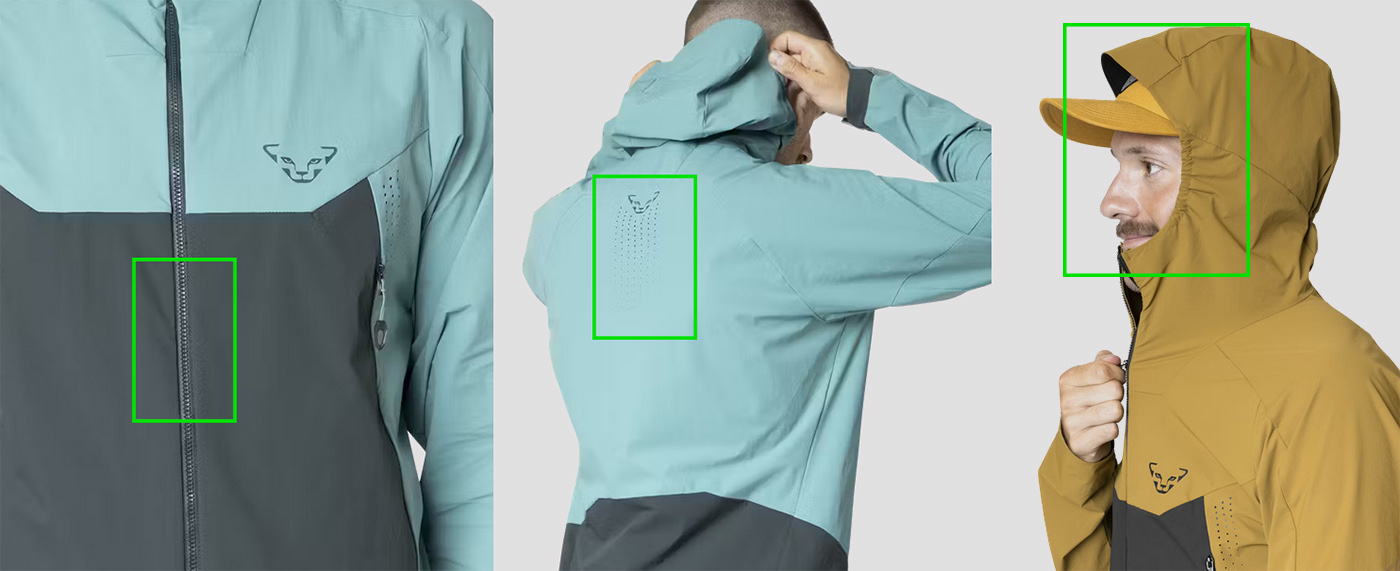 The latest version of Dynafit's Transalper Dynastretch solves the main zip, hood and potential back mesh vulnerability issue.
With all these remedial touch-ups, the weight has also increased and the newer version is now in line with Mountain Equipment's Echo. So perhaps we're writing about Mountain Equipment's replacement. Who knows?
Any Negatives?
There really aren't any negatives. The elements we'd highlighted in the comparison with Rab's Borealis could be viewed as negatives I suppose, but even if they are, the latest version of the Transalper seems to have remedied each one.
However, in the process the Transalper has put on quite a bit of weight (50g). So now it's heavier. So, that's a negative. See ... we got one in the end!
Conclusion
Dynafit's Transalper Dynastretch was already a stand-out softshell jacket with its focus on stretch and breathability in a form-fitting (or when sized-up, regular fitting) tough nylon-based package. We had some minor concerns regarding the durability of the mesh back panel, the choice of zip and the hood. Each of these elements has been addressed in the recent release of the new Transalper. However, in remedying these potential "issues", the Transalper has put on some weight (~50g).
It's very possible, and we won't know until we've tried the new version, that while we thought we were looking at competition for the Borealis, what we've actually been testing is a replacement for Mountain Equipment's Echo. At present it looks like ME may have discontinued the Echo (we hope not, but they've been making some strange choices lately).
In our view, the future of outdoor apparel is about taking the latest fabric and material innovations and applying them to tried and tested, classic, (semi) minimalist designs like those exemplified by Rab's latest Borealis Hooded Jacket and Mountain Equipment's Echo. There's no need to re-invent the wheel (the design), when the true innovation is coming from the material sciences (just make the tyres better).
The Transalper is a great example of this. Dynafit have chosen some technical, performance fabrics and applied them in a purposeful way. In doing so, they created the basis for a classic, lightweight softshell jacket. It looks like they got feedback mirroring our review (so we're not alone) and responded to it. The upgraded peaked hood, the Vislon zips and the increased use of laser-cut venting holes over an Air Mesh back panel, all look like sensible upgrades to us. An excellent softshell jacket may have just got even better. As such, the Dynafit's Transalper Dynastretch is well worth a special mention.
Product Images
Last Updated: 17/12/25