2025/2026 Kit Tests (Review & Preview) + Updates
In this post we're going to run through items lined up for the upcoming 2026 winter, summer and autumn (wet weather) kit tests, as well as mention some items of note from the 2025 summer and spring tests. But before all that, we have some manufacturing and store updates.
Contents
- Manufacturing Updates: Machine Padded Belts, Waterproof Overshorts & More
- Store Updates: Tent Pegs, Cords & Pole Accessories
- Upcoming Kit Test Items for 2026
- 2025: Spring & Summer Kit Test Items Reviewed
- 2025: Near Misses & Items of Note
- 2025: Summer Kit Test Snaps
Manufacturing Updates
Machine Padded Belt
As planned, we made some minor alterations to the Machine Padded Belt. We switched to a lighter EVA foam which allowed us to use 6mm foam on the padded side and a wrap around 3mm on the non-padded side. This was to prevent the padded component moving around the inner webbing belt (and it worked).
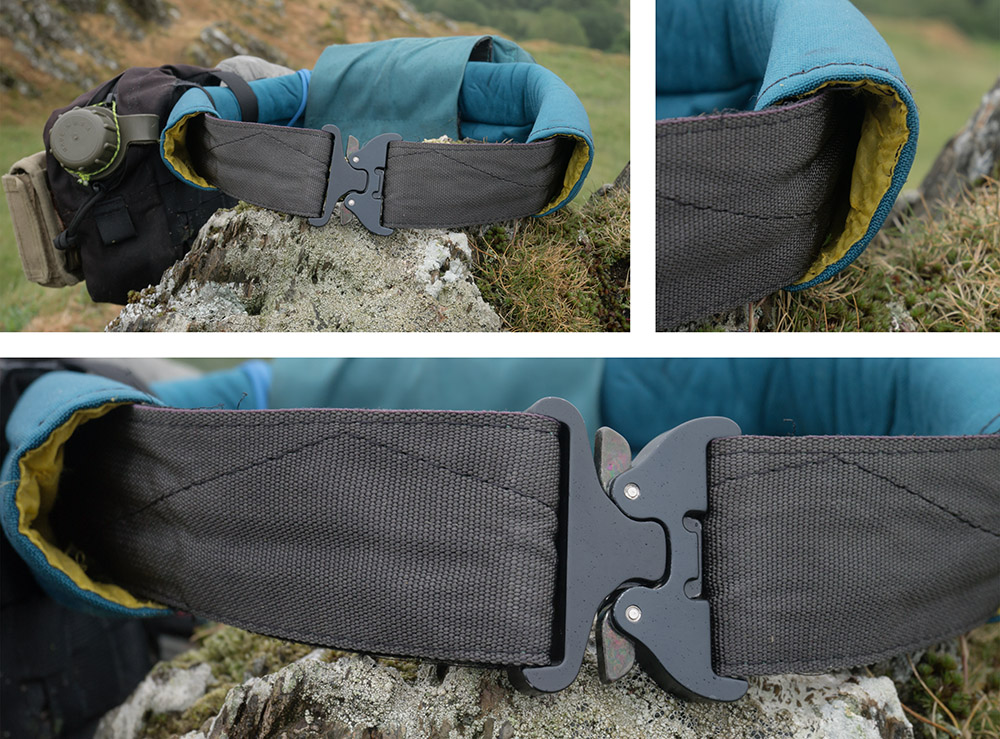 The Machine Padded Belt with Scramble's Machine Belt Bag.
We've now completed the testing phase and all went well. The Machine Padded Belt is now ready for production and is in the (unfortunately) long queue.
Waterproof Overshorts (Half Shorts & 3/4 Capri Versions)
We've finished testing the half short version of our waterproof overshorts and have decided to do away with the slit pocket access openings. The reason is that they're not needed and it creates a point of failure / fragility (in tests, sliding down wet slopes, this was one area which was prone to ripping). If you need to access your softshell trouser pocket you can either roll the shorts up or loosen the belt to pull them down. No need for pocket slits on overshorts.
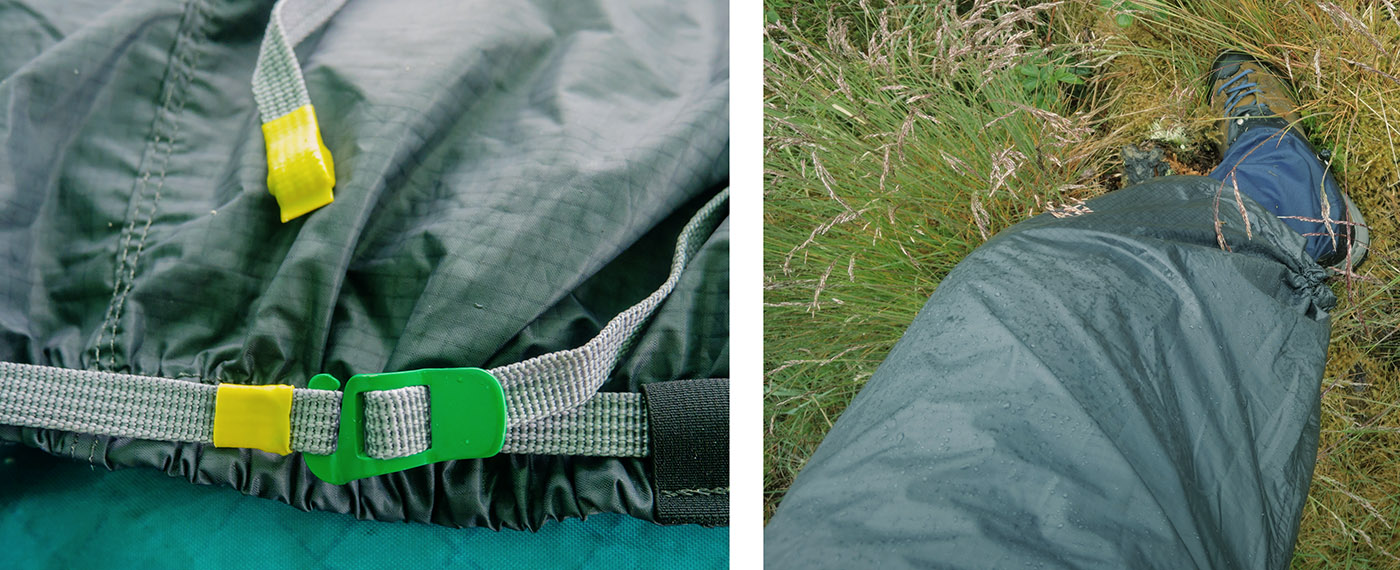 The waterproof overshorts (especially the 3/4 length version, above right) will continue to be put through their paces in the upcoming winter kit test.
We're using heatshrink tubing to finish the webbing so it has a hard stop when you loosen the belt and to provide a more robust and secure fit for the hook.
The included webbing belt is sized so that without unhooking it you can loosen it to its maximum circumference which is a fraction larger than the potential stretch of the elasticated waist. Simply put, you can take them off and put them on without un-hooking the belt. This is useful because it saves having to re-hook the belt, which can be fiddly in certain conditions.
The three-quarter length version is designed and sized to be worn over the 1/2 shorts. These are "downpour options" and in winter are designed to work with knee-length gaiters. If you don't wear gaiters in winter, then these wouldn't be a good option.
The three-quarter length waterproofs are a kind of "rain-skirt" alternative. Having them open at the hem, yet sitting below the knee, means most of the leg is sheltered but there's sufficient air-flow to reduce condensation. Because of their shorter length, you don't have flapping fabric around the boot and ankle, so they don't present too much of a tripping hazard. The 3/4 version has a dual channel cinching mechanism (they can be cinched from the left and right side of the leg independently), to provide a secure fit when used with gaiters for river / stream crossings or when scrambling.
Prototyping Projects
Investigational projects such as the "Return Home Shoes" (an approx. 120g per pair non-flip-flop shoe to wear for return journeys), are on the backburner until production backlogs are cleared.
Store Updates
Woojin's Tarp Pole Attachment
We now stock Woojin's Tent Pole Shoe, designed to work with webbing attachments connected to the base of tents acting as docking points for straight and preformed pole segments. However, these "shoes" can work just as well as "hats" when flipped over and placed on the top of tent poles. Dyneema cord loops (such as those on Scramble's G-38 and G-55 tarps) can then be threaded through the pole shoe's webbing slot and clipped via carabiners to guy lines. Effectively connecting tarp, pole and guy line. A very handy item for those who use 9mm poles with their tarps (and they're 4g lighter than the DAC Arch Connector which does a similar job).
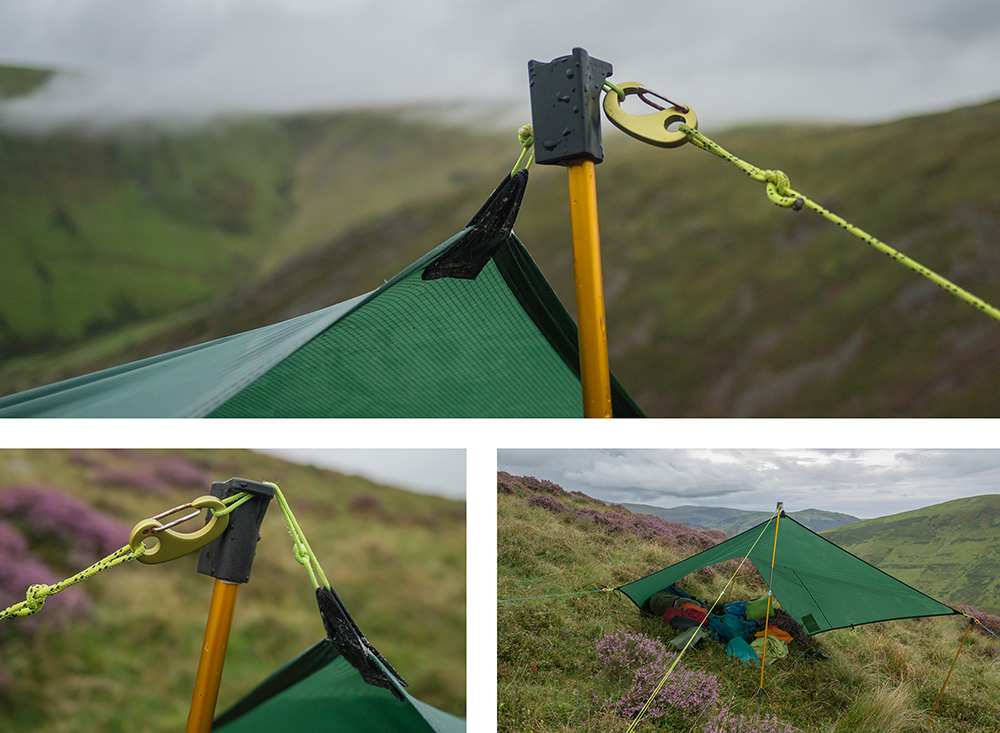 WOOJIN Tent Pole Shoe makes an excellent attachment point for 2 or 3 section 9mm DAC Featherlite NSL poles.
Cords & Tent Pegs
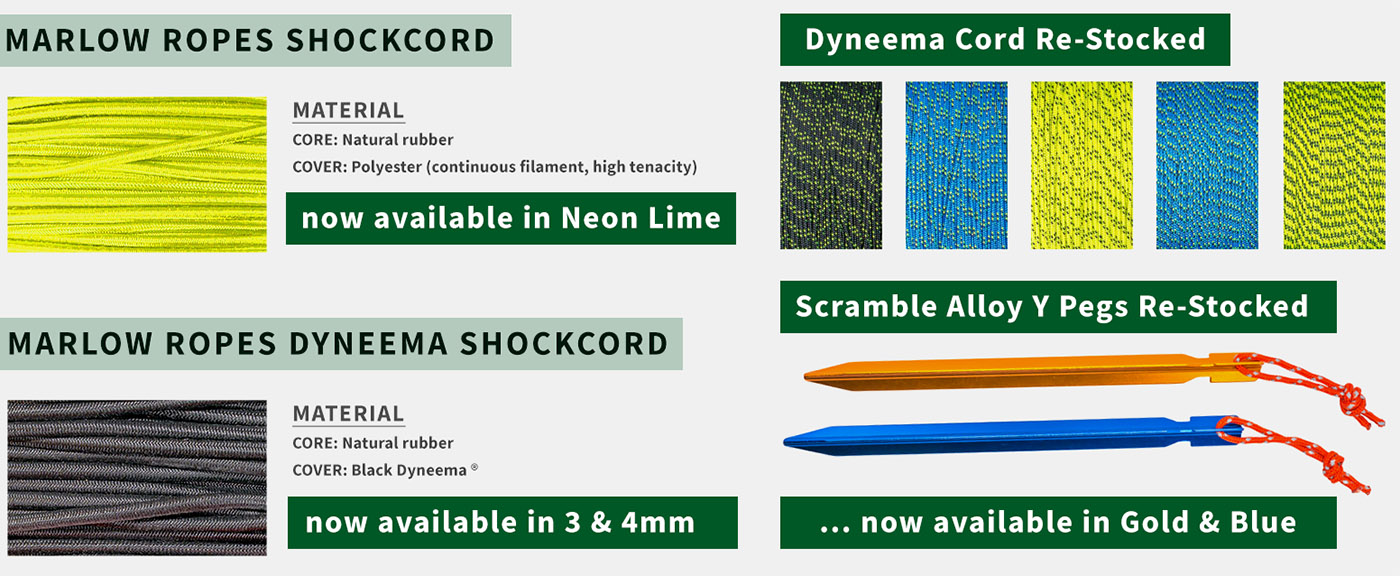
We've re-stocked all of our existing cord and tent pegs and have added a few new options.
Upcoming Kit Test Items
- [ Midweight (~700g) Insulated Jacket ] Keela Belay Pro Jacket (M = 640g)
We'll be testing this jacket in the upcoming Winter Kit Test, not so much as a replacement for the Keela Belay Smock, but as a lighter alternative. We've come to the conclusion that for static use (which for us is what these jackets are for, as opposed to actually belaying) a hood isn't necessary (balaclava and beanie is sufficient). However, we feel the major determining factor here is body length. Our current view, is that for taller people the Belay Smock is the way to go, but for those under 6ft who want to save some weight the Belay Jacket may be a good alternative. That's what we'll be testing when it gets cold.
- [ Midweight (~400g) Down Hooded Jacket ] Sub Zero Lightweight Down Hoody (L = 390g)
This isn't a priority but we've been wanting to test Sub Zero's down jackets for a while and so we'll see if we can fit it in somewhere.
- [ Hot Weather (Under 300g) Softshell Trousers ] Rafiki Drive Pants (M = 262g)
We're very happy with the Rab Inclines for 3-Season use and we're testing them as a winter option with some fortification, but we wanted to look at some lighter-weight options for those that trek in genuine hot climes. Rab's Incline Light Pants are an option, but we've been impressed with these climbing trousers from Rafiki and wanted to see how they fare (in the Summer Kit Test). They break most of our rules regarding belts and pockets. So, we'll see.
- [ Lightweight (Under 400g) Softshell Jacket ] Karpos Lavaredo Jacket (w/ Polartec Alpha, XL, 314g), Karpos Alagna Plus Evo Vest (w/ Polartec Alpha, XL, 306g)
We're looking at a number of items from Karpos' Laveredo and Alagna lines. These are the two that look most interesting and both are likely to work as winter softshell inners under something like Dynafit's Transalper which we reviewed recently. It also provides an opportunity to test some Polartec Alpha gear (note these pieces use Alpha and so are lined, not Alpha Direct which is open / exposed). Both pieces use very minimal and strategically placed insulation - so overheating is unlikely.
- [ Lightweight Sleepwear / Baselayer Backup Tops ] OMM Breeze Hood (M, 125g), Dynafit FT Dryarn Warm Hoody (L/XL, 225g), Dynafit Traverse S-Tech LS Crew (L/XL, 144g), Karpos Croda Light Half Zip Pullover (XL)
We're always looking at possible contenders in the sleepwear and baselayer categories. The four tops mentioned are all quite different from oneanother. Out of the four, the Karpos looks like the most likely replacement for Montane's Allez Micro Pull-On (which they seem to have discontinued). However, our use of OMM's Core Zipped Vest, takes away some of the need for a thermal element. So we're playing with a range of options.
- [ Extremities / Accessories ]
[ Static Thermal Headwear For Sub Zero Conditions (Under 70g) ] Artilect's Valley 250 Balaclava & Walrus Beanie
We've been impressed by a number of Artilect accessories and so want to test their heavier duty Nuyarn (merino) options for sub-zero, around camp duties.
[ Thermal Over-Mitts ] Inov8 Extreme Thermo Mittens, Montane Chonos Fleece Mitts
Buffalo Mitts have been getting very expensive, so we're looking at a couple of lightweight alternatives.
[ Gloves & Wrist Gaiters ] Milo Yeru Fleece Gloves (L, 48g), Sub Zero Meraklon Insulated Wrist Warmers (OS, 24g)
Milo's Yeru gloves are Polartec Power Stretch gloves and look very similar to Rab and Mountain Equipment's offerings. The Sub Zero wrist gaiter is a polypropylene number which we'd prefer had more thumb protection but we'll likely pair it with their Factor 2 Fingerless Gloves (which are excellent).
[ Cold Weather Waterproof Tent Boots ] OMM Core Tent Socks, Dexshell Running Lite Waterproof Socks
We're testing a few lightweight alternatives to see if we can radically reduce the weight of our cold weather modular tent boots.
[ Light Trekking Sock ] Darn Tough Hiker Micro Crew vs HJ Hall ProTrek HJ701 Adventure Walking Socks
When it comes to socks, we've decided to do a brand review instead of recommending an individual sock. People's feet and boot purchases will necessitate a personal / subjective fit which we can't second guess. Instead we'll simply look at Darn Tough and HJ Hall and show which socks we use / like.
[ Footwear ] Bestard Nova (Winter, Membrane) Boots, Zamberlan Salathe RR Approach (3-Season, Non-Membrane) Shoes
We don't review individual shoes and boots, but rather point out what to look for. The Nova's are very similar to the Altberg Bergens but with an outdoor, non-military look. The Zamberlan Salathe are a leather (non-membrane) approach shoe similar to Scarpa's Zodiac. We'll see how they drain in our wet weather kit test. We'll also be testing our Kevlar laces and may start offering them if they work well.
- [ Modular Approach to a 4-Season Sleeping Mat ]
* Mountain Spring Ying 99 (UL Closed Cell) Sleeping Mat (182 x 51 x 1.7) - 110g + 10g bag
* Nordisk Ven 2.5 Self-Inflating Mat (290g+ Nordisk Stuff Sack (20g)
* LightTour Half Pad R1.5 (182g + Klymit 12g Stuff Sack + Repair Kit, Accessories)
* Scramble Ultralight Evazote (EV30) Foam Mat (Short, 60g)
We've pretty much settled on our combinations for a modular sleeping mat system. We just need to test this ensemble in sub-zero conditions.
- [ Lightweight (<400g) ~20L Pack (+ Side Pouch) ] Mountain Hardwear UL 20L Backpack, Blue Ice Dragonfly post 2022 (18L, 210D) (380g without foam)
Perhaps Blue Ice listened to us when we warned them over cost-cutting the spine out of their Dragonfly packs, they've now beefed up the Dragonfly. We still prefer the old one, but 210D 6.6 ripstop nylon is a major improvement. The old Dragonfly had 100D sides and a hefty 420D ripstop Cordura back (and was lighter). The new ones have 210D (non-Cordura) all around. When we find time, we also want to test Mountain Hardwear's UL 20L pack.
Note: There are a number of other items in circulation being re-tested that we haven't listed above.
Modular Sleeping Bag System: Lighter, Not Warmer (Just An Idea We May Want To Test)
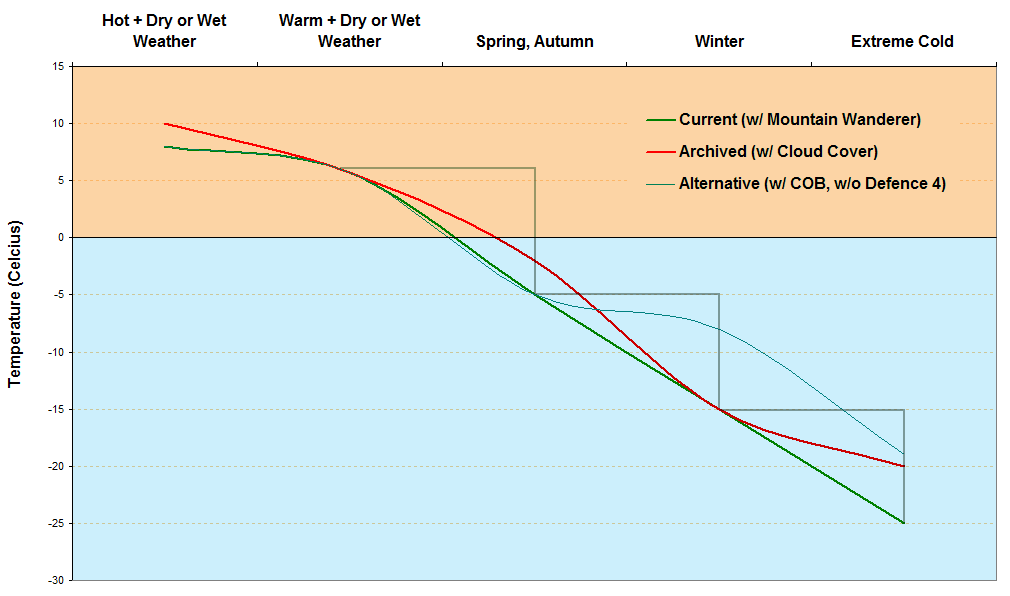
We'll quickly mention an item we haven't yet purchased, but looks interesting as an alternative weight-saver in our modular sleeping bag system. We recently reviewed Cocoon's Mountain Wanderer and when looking at Cocoon's liners we noticed they also do an "overbag"; a cross between a quilt and a bivvy. It's quilt-like in that all the insulation (Primaloft Gold) is on the top and sides and it's bivvy-like due to it being oversized and having a hydrostatic head (HH = 1000mm). Theoretically (we believe EN tested), it adds 14°C to ones sleep system. So, for those that don't need to get down to -25°C and are happy with a -19°C Comfort Limit, at the extremes, one could substitute the Defence 4 for Cocoon's Over Bag (COB) and for extreme sub-zero conditions use the following 3 bag setup:
- Inner / Liner: Cocoon Mountain Wanderer (550g w/o stuff sack)
- Main Bag: Carinthia G-90 (690g w/o stuff sack)
- Outer Cocoon Over Bag (690g w/ stuff sack)
Where this approach differs from our current (double bag) recommendation is in winter (double-bagged) and down to extreme sub-zero (triple-bagged, as per above). In winter, you drop from spring/autumn's -5°C to just -8°C (rather than -15°C), before dropping a further 11°C down to -19°C (as per the thin blue line, Cocoon Over Bag / "COB" system, versus the thick green line, our current system with the Defence 4). The red line is our old system with Alpkit's Cloud Cover instead of Cocoon's Mountain Wanderer.
In winter, although you're losing 7°C of warmth (compared to our current system) you're also shedding nearly ~280g in weight. Furthermore, measured against our lighter (now archived system with Alpkit's Cloud Cover) in the extreme sub-zero range, you're losing only 1°C of warmth while shedding ~180g. Based on RRP, the Cocoon Over Bag is only £10 more than the Cloud Cover and £45 cheaper than the Defence 4.
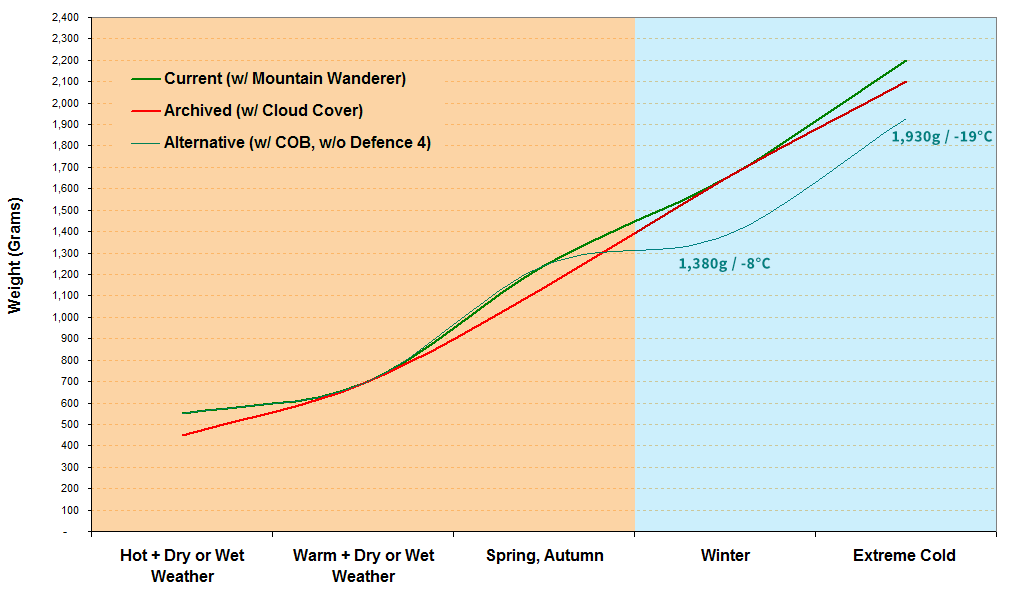
Our feeling is that the Cocoon Over Bag (COB) may be worth testing. If the theory works out in practice, this may be something we'd recommend as a lighter (and cheaper) alternative for those that want a flexible, 4-season system that functions in wet conditions but for whom weight is the primary concern. For some context, Rab's Solar Eco 4 has an EN Comfort Limit of -8°C and weighs 1475g (Regular) - that's 100g heavier than the COB + Carinthia G-90. With this modular system however, there's room to add the Mountain Wanderer to get down to -19°C and still remain under 2kg. That's not too shabby. Something we hope to explore further.
2025: Spring & Summer Kit Test Items Reviewed (Special Mentions)
It's always nice when a good deal of initial research pays off. A number of the items we tested in 2025 garnered reviews (either official or "special mentions"). The reviews are linked below:
- [ Hybrid Wind-Top & UL Waterproof Jacket ] OMM Halo Smock
- [ Lightweight (Under 350g) Softshell Trousers ] Rab Incline Pants
- [ Lightweight (Under 350g) Softshell Jacket (Special Mention) ] Dynafit Transalper Dynastretch Jacket
- [ Baselayer Bottoms (All Season), Half-Shorts, Leggings, Tights ] Saxx, Löffler, Odlo (Multi Product Review)
- [ Utility Insulation Layer (Active & Static) ] OMM Core Zipped Vest
- [ Headwear for Dynamic Activities: (Half) Balaclava ] Artilect Darkhorse Neck Tube
- [ Modular Sleeping Bag 1: Best 1 Season and 4 Season Inner ] Cocoon Mountain Wanderer Sleeping Bag
- [ Headwear for Dynamic Activities: Lightweight 3 Season (Baselayer) Beanie ] Artilect Darkhorse Skully Beanie
2025: Near Misses and Items of Note
We don't normally go through all the kit we've tested that didn't make the grade, and we're not going to here either, but we will mention a few items that we felt worth discussing.
Bestard Gobi (Non-Membrane Trekking Shoes)
Over time a number of readers have recommended boots and shoes with predominantly synthetic uppers. Largely based on our quite extensive (off-path) experience, we've taken quite a hard line in favouring leather uppers which, assuming the leather is of good quality, are tougher than almost all synthetic materials (even Dyneema or Kevlar infused ones). However, we thought we'd revisit the question and gave the reasonably heavyweight Bestard Gobis a try (EU43 = 946g per pair).
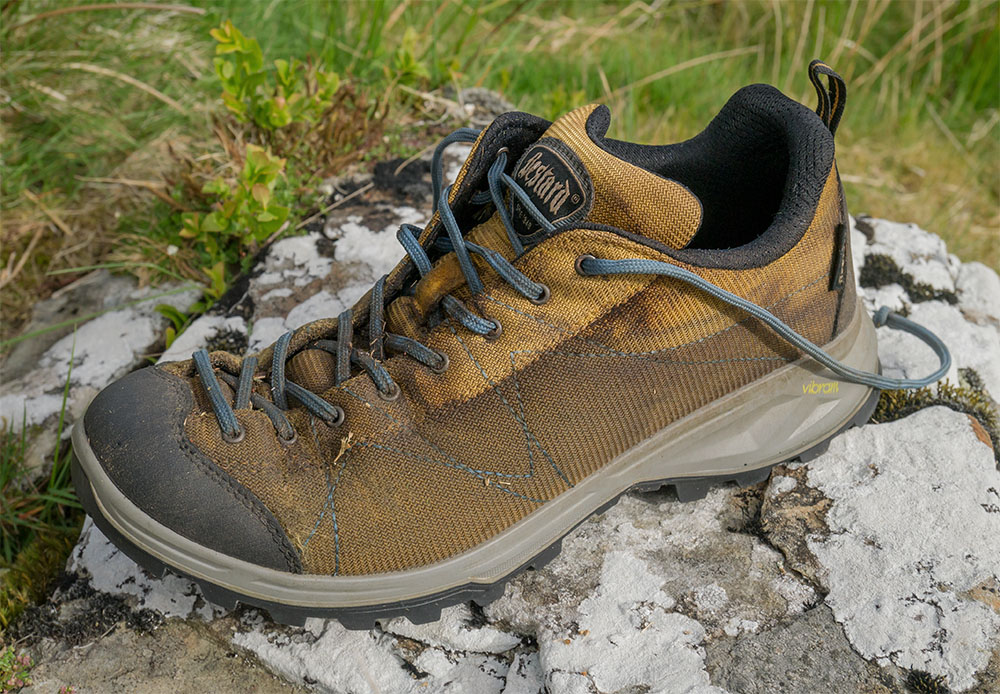 The Bestard Gobi are the best draining shoes we've come across.
The Gobi has a solid and quite thick Cordura upper with a Vibram Impulse sole. I found it very comfortable over long distances. Advertised as a trek (rather than approach shoe) it makes no claim that it's designed for our purposes (off-path mountain trekking), rather we get the impression that Bestard may have envisaged this being worn on the Camino trail.
That said, the Gobi performed pretty well. Out of all the (non-membrane) footwear we've tested, they're the very best at draining water. I almost looked forward to river and stream crossings, knowing that the water would practically squirt out of these things. The Gobis were tested in the spring (wet weather) and summer kit tests and clambered over carnage forests (see images below), stone walls, barbwire fences and the sharp, hard and irregular greywacke rock of the Harlech dome.
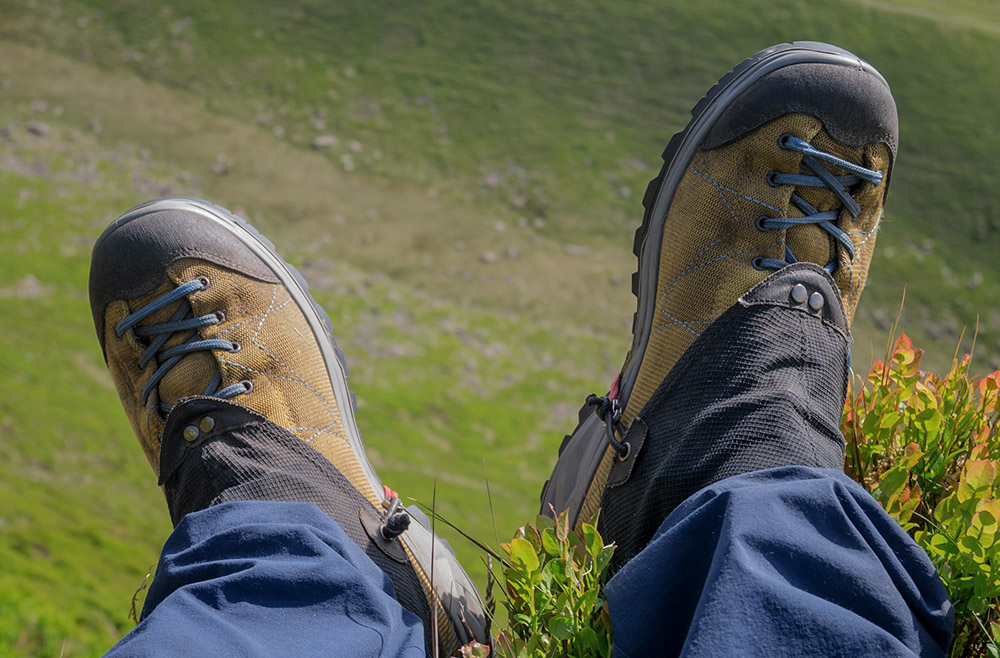 Vibram Impulse soles and Cordura uppers. But is the Cordura tough enough for the greywacke?
The Rhinogs are a great place to test footwear, as not only does the rock shred sub-standard footwear (and seemingly point in every direction your foot doesn't want to go), the harsh undergrowth is unforgiving, whether tangled in heather and thistle or trapped in steep descents of tall prehistoric bracken - all of which covers abrasive, highly irregular boulders with deep cracks, inlets and gullies. It's a ligament shredding paradise.
I wore the Gobis with a modified pair of Alpkit's Kantju running gaiters and so they had some additional protection. Even so, after about 25 days of bushwhacking use the Gobis are showing signs of duress in one particular area (just beyond the toe cap).
Bestard could remedy this issue quite easily, it simply requires an extension to the toe cap rand. Pictured below (right, #2) is what Bestard could / should do to extend the Gobi's potential from "car-park & trail" to genuine off-path, mountain and marsh trekkers. They'd have a great 3-season master drainer that could manage tough mountain terrain.
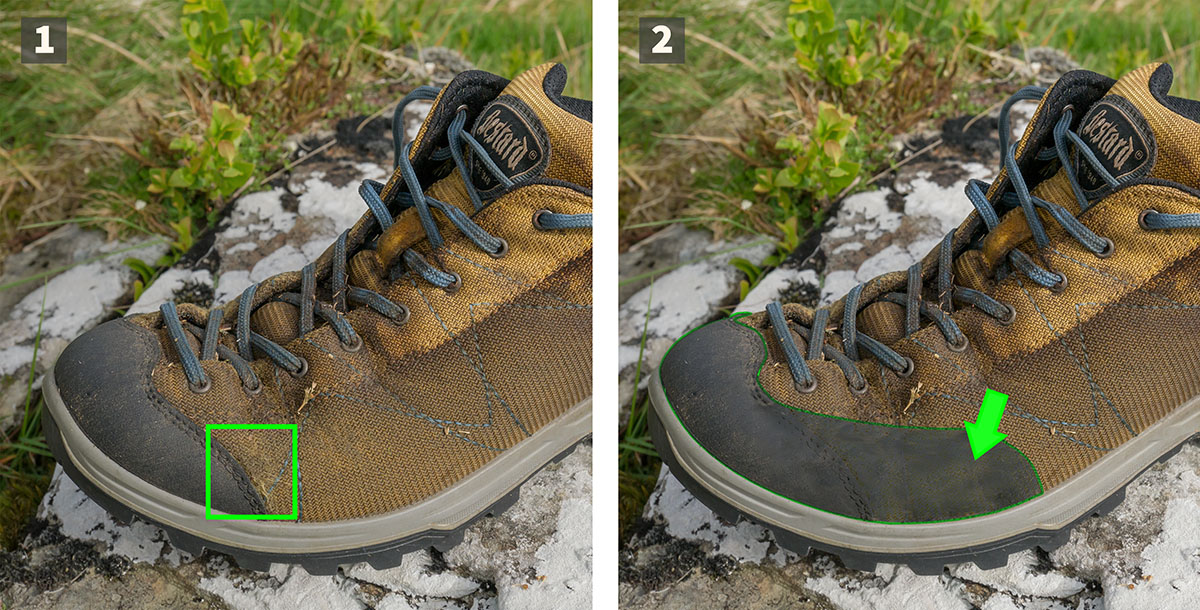 It's a simple fix that Bestard could easily implement.
We'll send this to Bestard and see if they want to make a Version II. If they do, the only other thing we'd change is the depth of the heel cup which is a little too aggressively recessed in our opinion, but this is subjective and everyone's feet are different. It's one of the reasons we don't do specific footwear reviews.
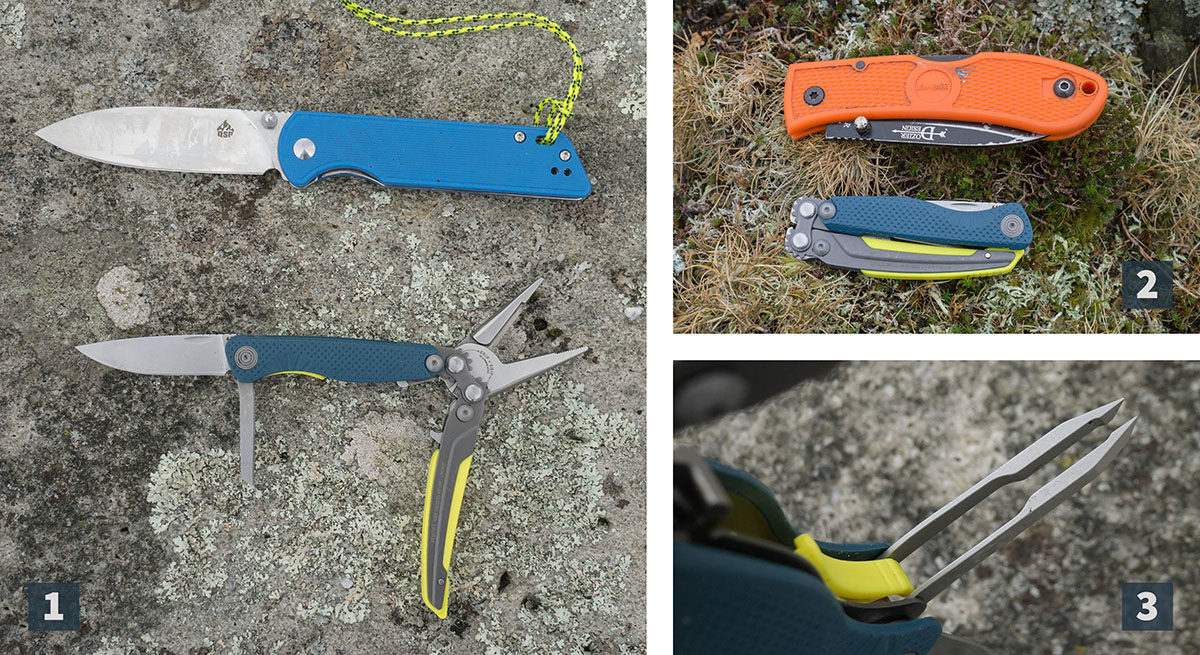
QSP Parrot G10 V2 (Folding Knife)
We're fans of QSP, they make a wide range of excellent quality budget knives. Unfortunately they seem to have shelved the Piglet which was a fantastic knife that used a good steel and had a 3.7mm thick blade. It was a little chunky and overweight (100g) for our purposes, but highly recommended. Like the Piglet, the Parrot is a liner lock and has G10 scales and a smooth action, but its form is more akin to the Ka-Bar's Dozier Folding Hunter (our top pick).
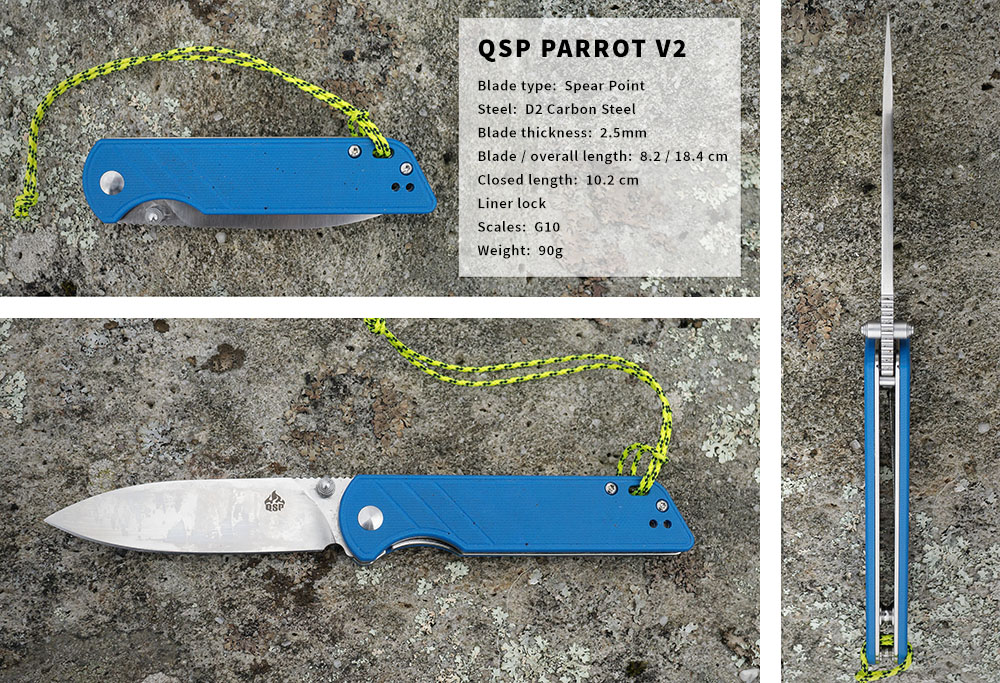 A great value alternative to the Ka-Bar Dozier Folding Hunter.
The Parrot is around £8 cheaper (Reputable Dealer Link *) but 25g heavier than the Dozier. There's not a great deal in it, but we still rate Ka-Bar's Dozier (Reputable Dealer Link *).
* Note: We don't get any commission or financial benefit linking to third party retailers / suppliers (in case you think we've started whoring ourselves out). Instead, we just point to retailers and suppliers we've found to be trustworthy and reliable (so readers can avoid some of the headaches we've experienced while sourcing such items).
SOG Aegis MT (Sprung Pliers Multitool)
This won't be relevant to everyone but for those that carry gear that may require some leverage to loosen screw fittings, nuts and bolts etc, having a mini pair or pliers is a must. Personally, since I have to take photos when I'm in the great outdoors, I sometimes need to unscrew or adjust something over-tightened on my ultralight tripod and a pair of pliers is called for.
 A simple tool for those who need a compact pliers (you get superb tweezers and a back-up knife thrown in).
Via a mixture of double-counting and wishful thinking SOG state this mini-multitool comes with 5 discrete tools, in reality it has 3, which, when they're all very good, is enough. On top of a capable pair of sprung pliers you have a back-up knife and an excellent (absolutely superb) pair of tweezers which are so much better than most other tweezers on multitools. I've done three surgical extractions with these and was very impressed and surprised how easily I'd pulled out the spiky intruder. The SOG Aegis MT, which seems to be aimed at anglers, weighs in at 70g.
As far as we understand it, the situation with SOG is peculiar. They shifted (a proportion of) their manufacturing to China. Then they abandoned a number of product lines (not entirely sure about this) and the factory in China said, we want to continue producing these items and so they did. Unfortunately, under pressure from the UK's authoritarian regimes, the Chinese (i.e. AliExpress) now won't ship (even UK legal) blades to the UK. If you want one, you may need to do some digging. We got ours from AliExpress for £27 each. It doesn't look like you can do this anymore. Feel free to thank your government "representatives" for pruning your liberties a little every day.
The Scott Explorair Softshell SL Hooded Jacket
Swiss brand Scott make some quality gear. Their Explorair softshell (L = 358g, Scott's stated weight is way off) is a well-finished and hard-wearing softshell made from 89% nylon and 11% elastane (so it's got some stretch). The adjustable hood is well done. It has two zipped hand pockets and two generous internal open glove pockets. Strangely, they didn't provide any lycra binding at the cuffs. On first inspection this bothered me a lot, however in use I found I just rolled the sleeves up a fraction at the wrist and it didn't bother me a great deal. However, this is not optimal; a minor negative.
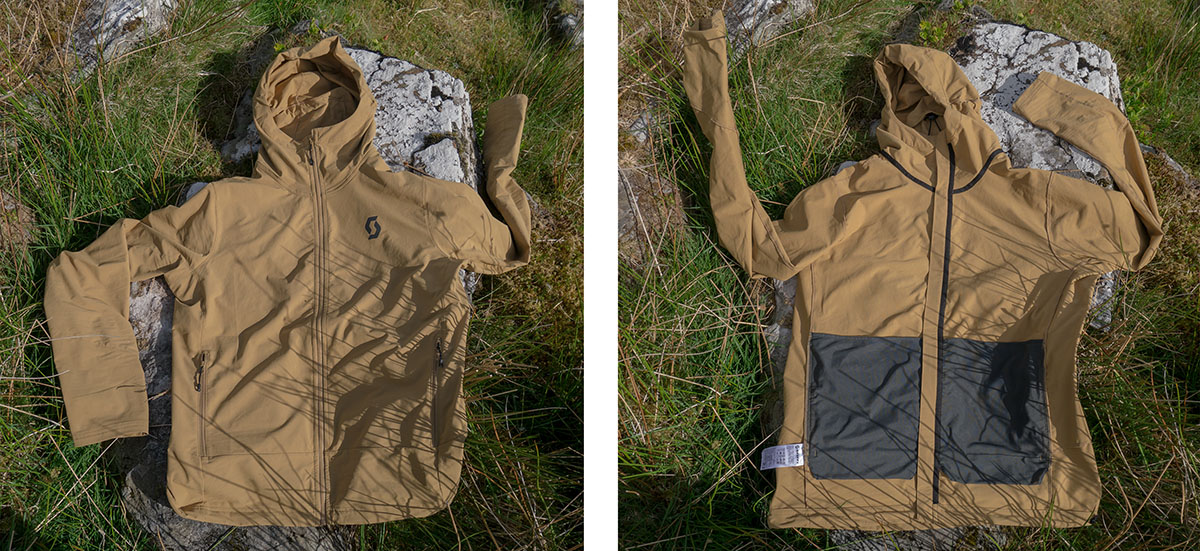 The Explorair features two large internal "glove pockets" but no chest pocket.
We need to see what Mountain Equipment (who in our estimation haven't been at their best recently) do with their Echo softshell. If it wasn't for the Echo (which is close to perfection) the Explorair would be a contender. If Mountain Equipment have discontinued the Echo (with no plans to offer a like-for-like replacement), then we'll revisit this question. However, there is stiff competition coming from Dynafit, Karpos and Rab.
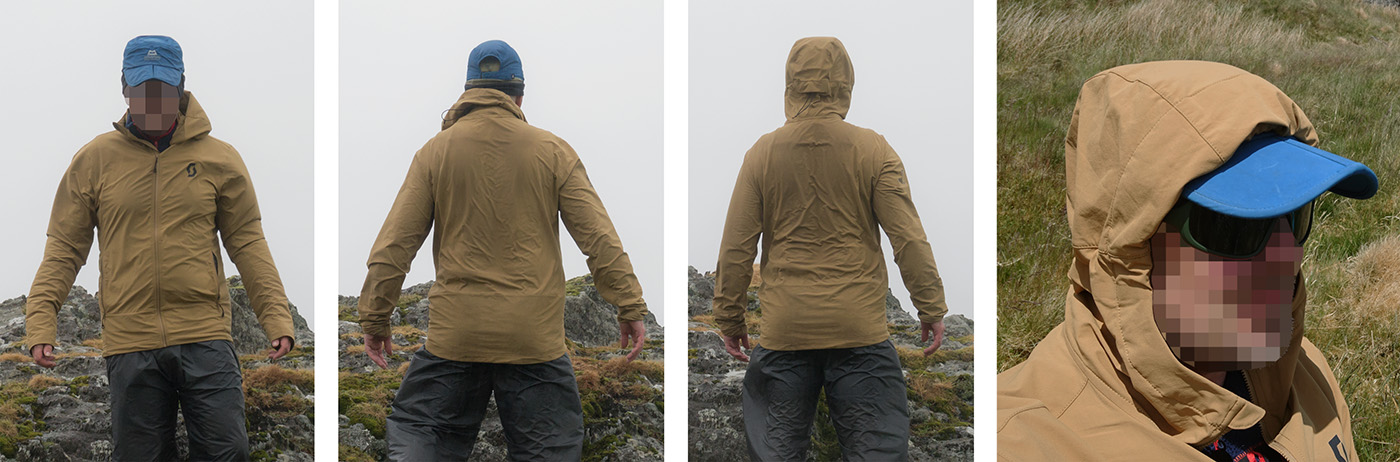 Scott's Explorair is a tough, light-to-midweight traditional softshell - a contender.
That's all the important stuff out of the way. Next some pics from the last two kit tests ...
Photo-Geek Note: I've swapped out my Sony RX0 for an Olympus TG-7 (as my tough backup camera). I got tired of colour-correcting and de-sharpening the out of camera jpegs of the RX0 (there's something funny about Sony colours especially in very green environments - it kept wanting to add reds that weren't there). With the Panasonic GX1, which is responsible for all the product and most fairweather photos, I shoot in RAW format. but for crap weather, candid snaps I've switched from the RX0 to the Olympus TG-7 which has a lower resolution and smaller sensor but much more natural colour / image rendering and a 25mm to 100mm (FF equivalent) zoom. Hopefully we'll see a difference.
2025 Spring & Summer Kit Test Snaps
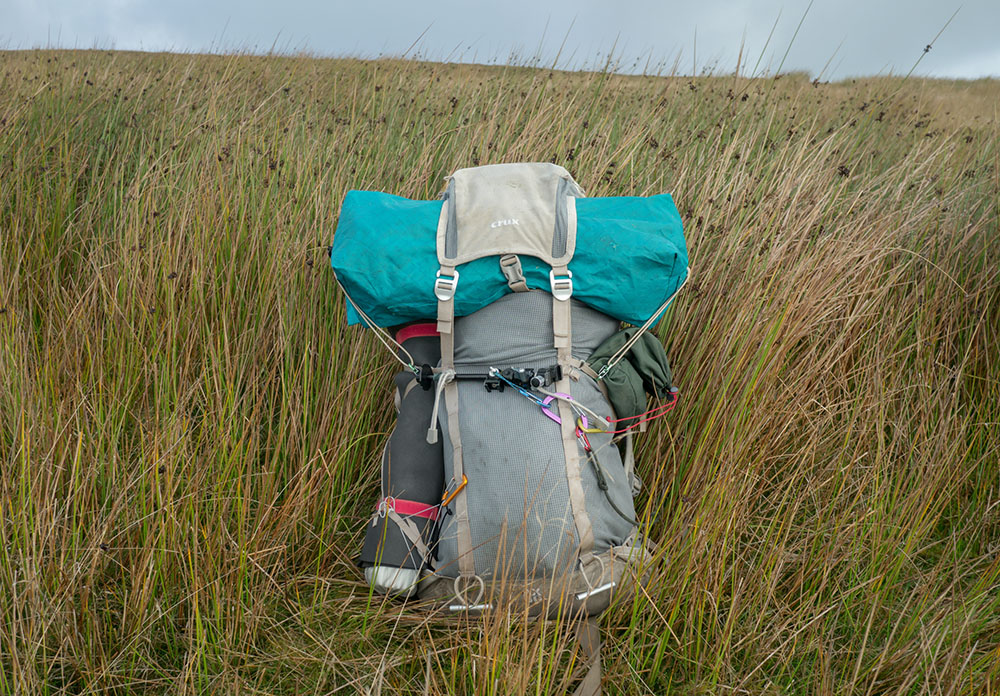
The Crux AX50 and an Electric Peacock PAX Tower doing the heavy lifting.
Double rainbow after some heavy rain during the Sping Kit Test.

Great shredder of footwear and strainer of ligaments, the Rhinogs.
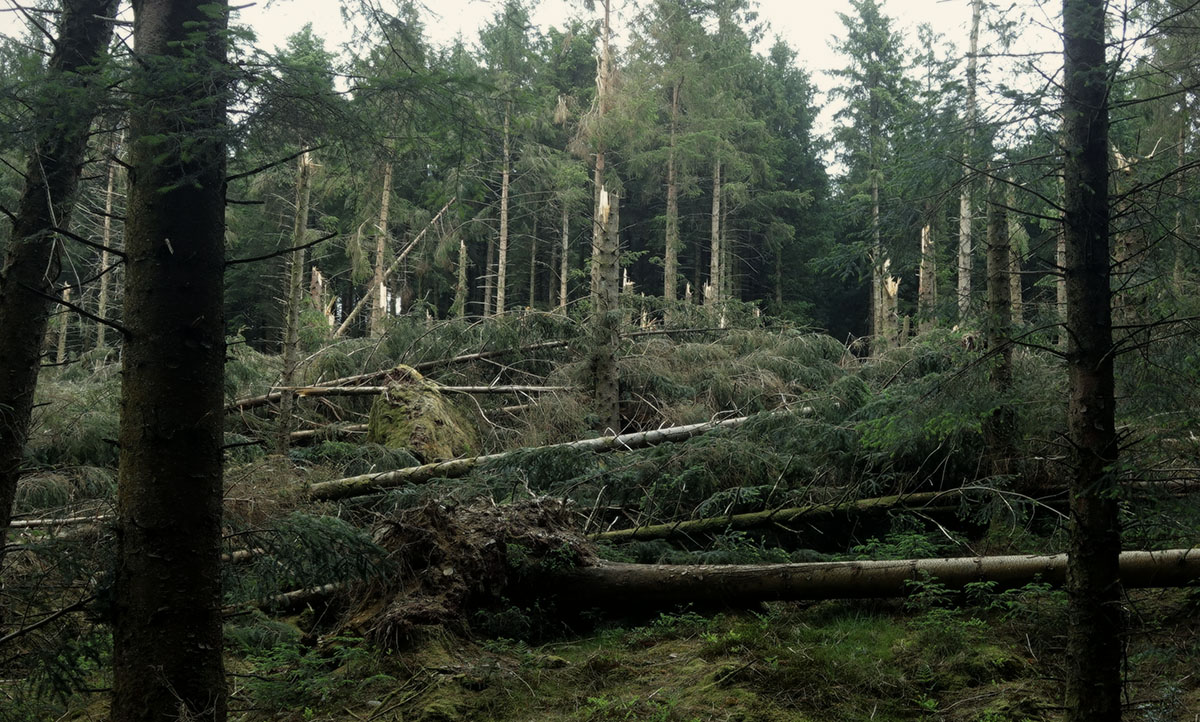
There was a storm in west Wales in December 2024 with 90mph winds. This caused some carnage in many of the forests I short-cut my way through as I traverse south to north Wales. Most of this destruction lingered through 2025, as such quite a bit of crawling, clambering and "break on through to the other side" was required.
Overgrown paths and abandoned forestry tracks were often completely blocked.
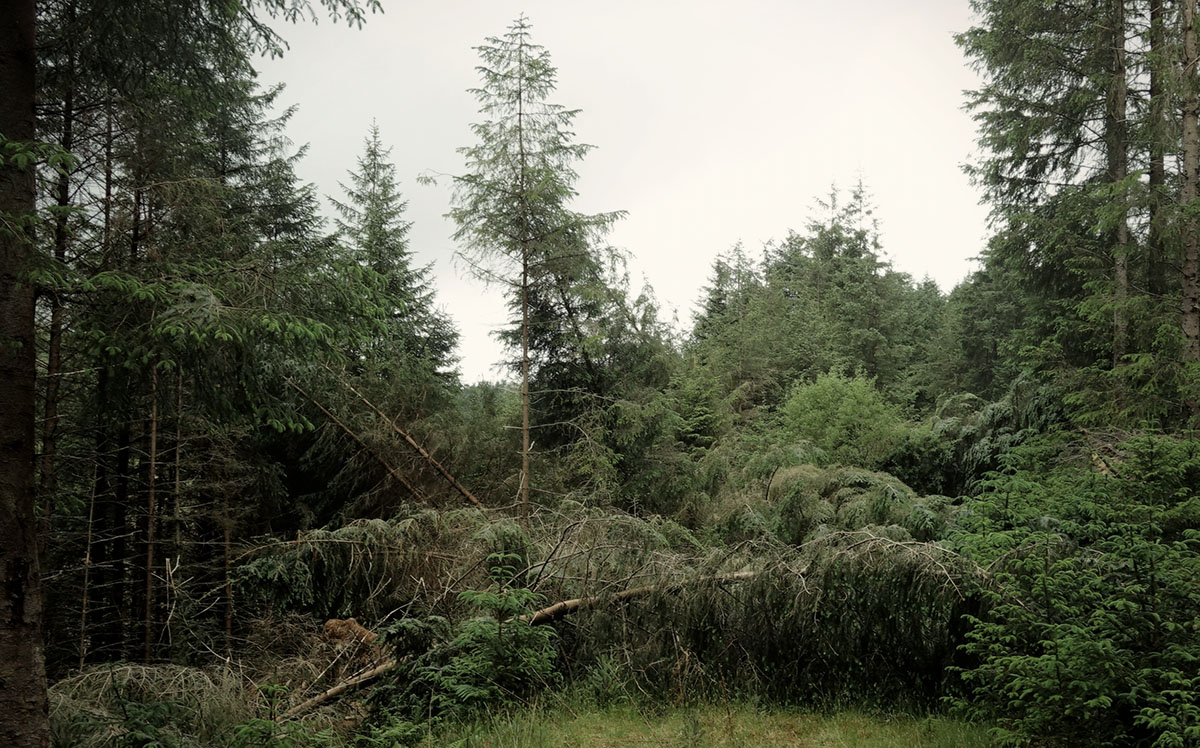
Minor cut-throughs were also tricky.
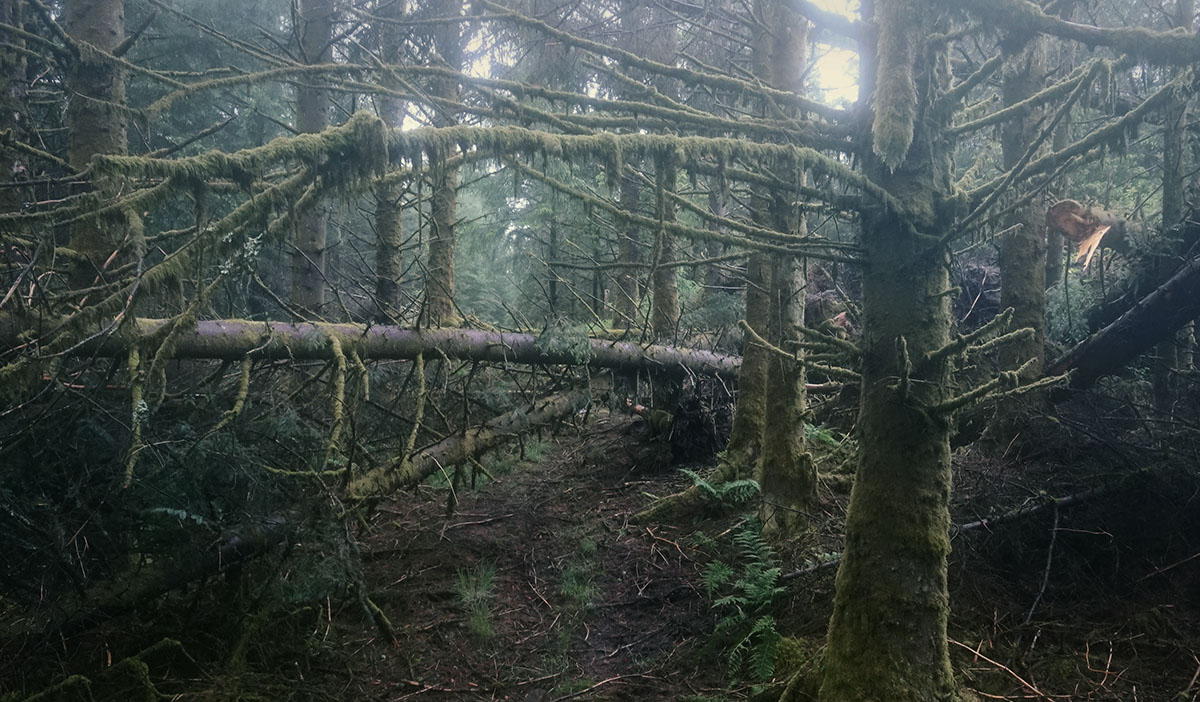
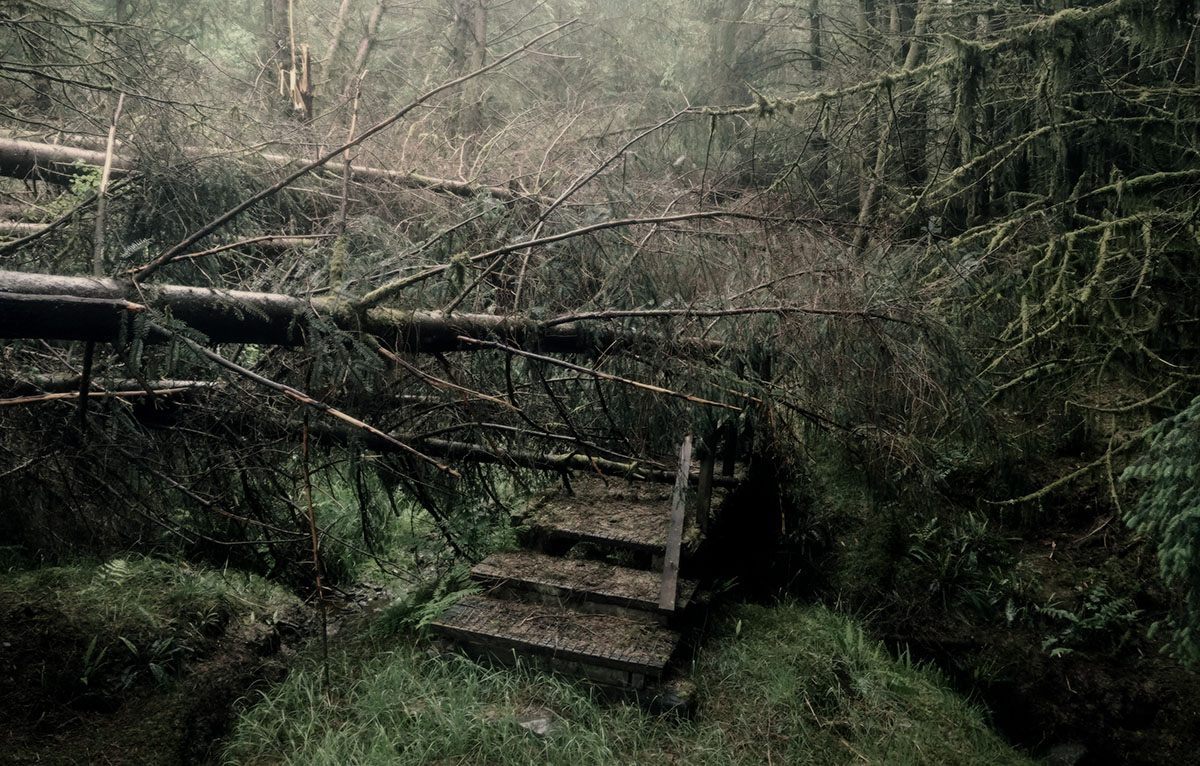
... and established mini-trails with dinky footbridges over streams were merely collateral damage.
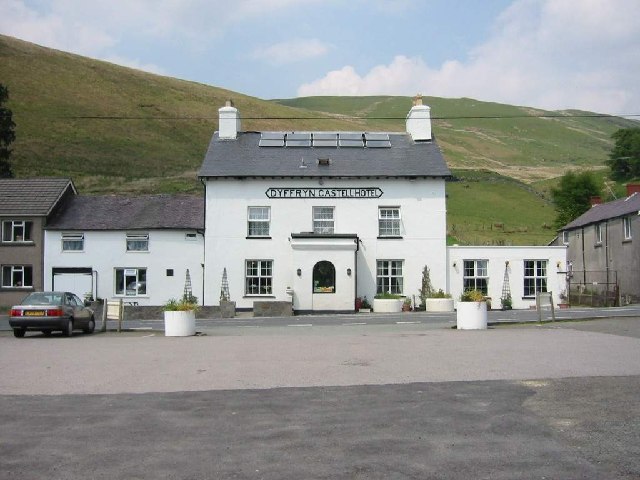
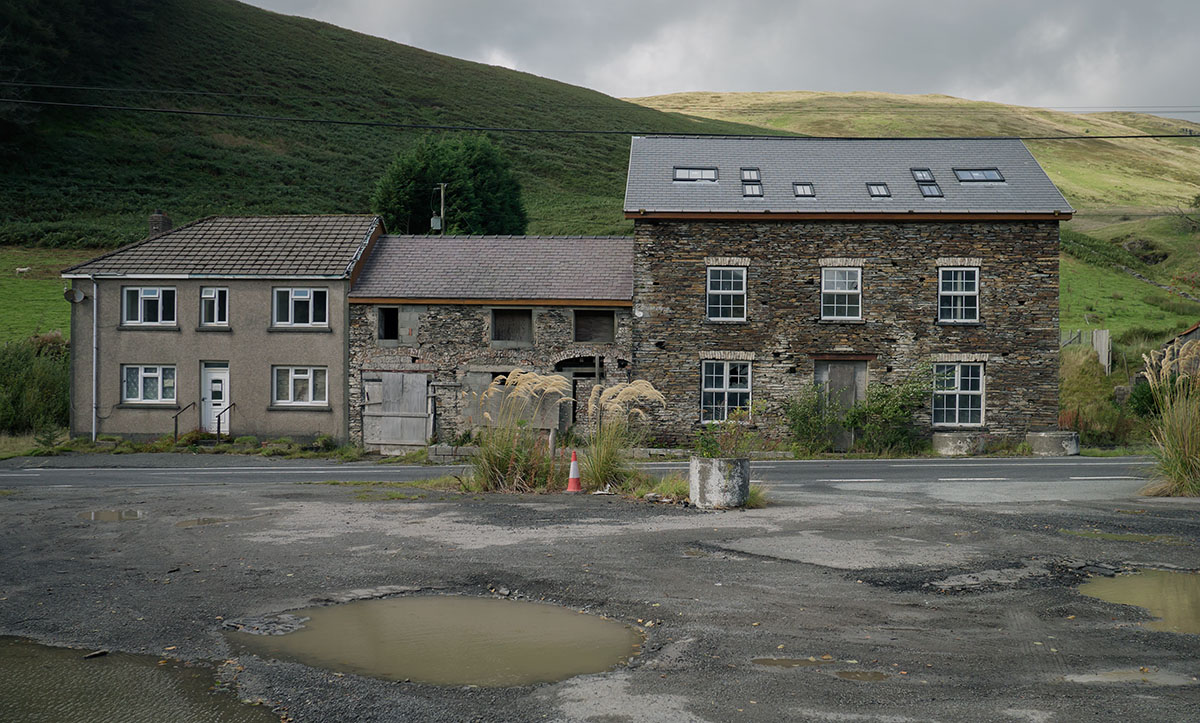
This is Dyffryn Castell Hotel (pronounced Difrin Casstek). It used to look like this, but it doesn't anymore. For me it's often a way-point between two reasonably taxing slogs, one through steep forests and the next one up to a ridge that runs atop Nant-y-Moch reservoir. When I get here, I know I'm closing in on Machynlleth (gateway to north Wales).
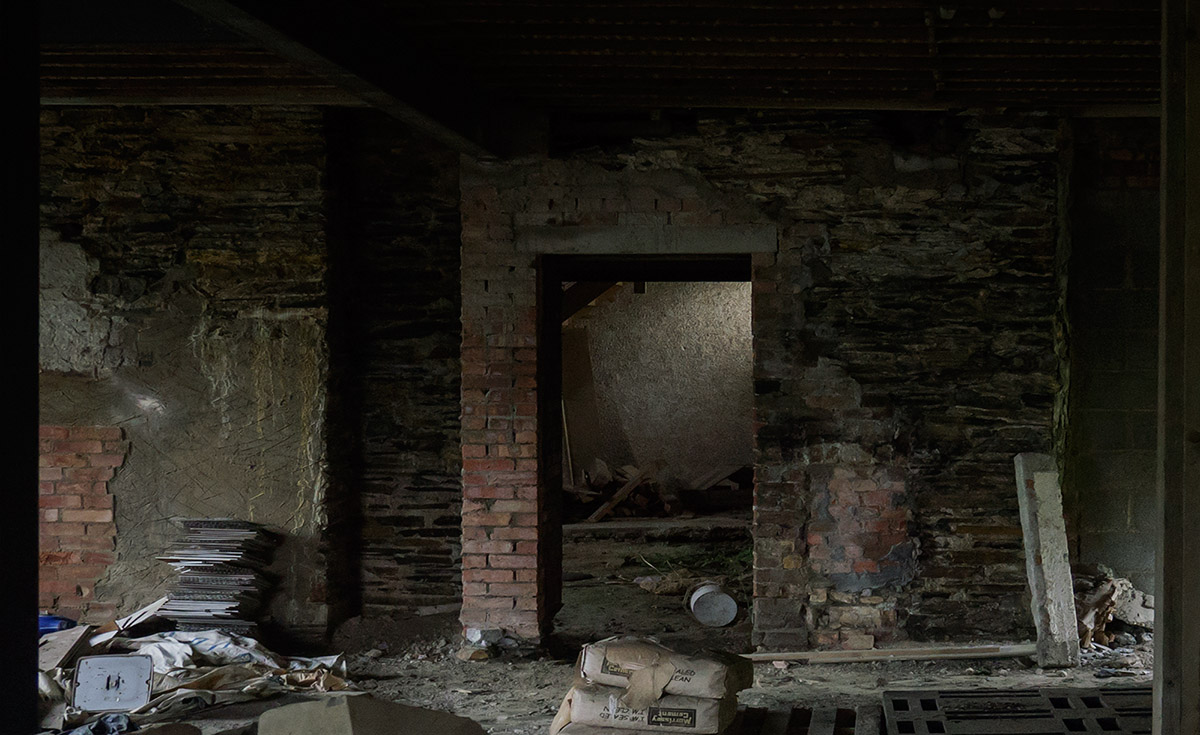
Inside one of the buildings on the right hand side of the hotel above, I thought I saw a man lying on a bed in the deep recesses of this perpetual restoration. But it was just a man made of timber.
So much for my ride home.
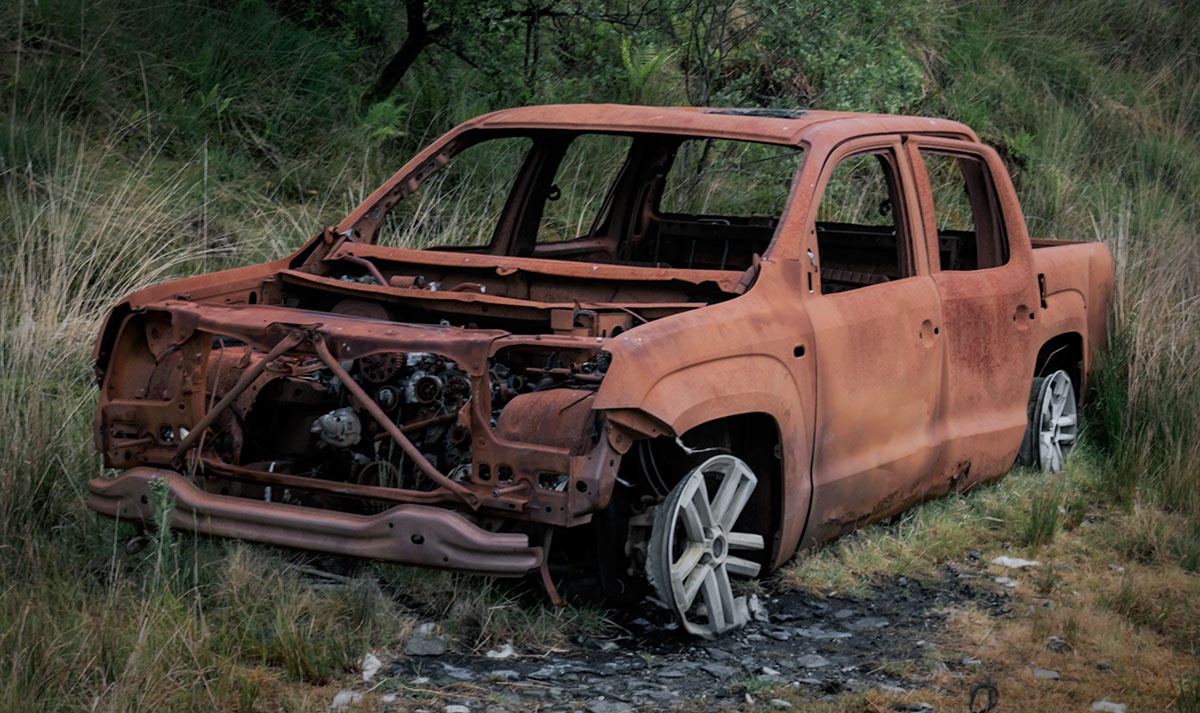
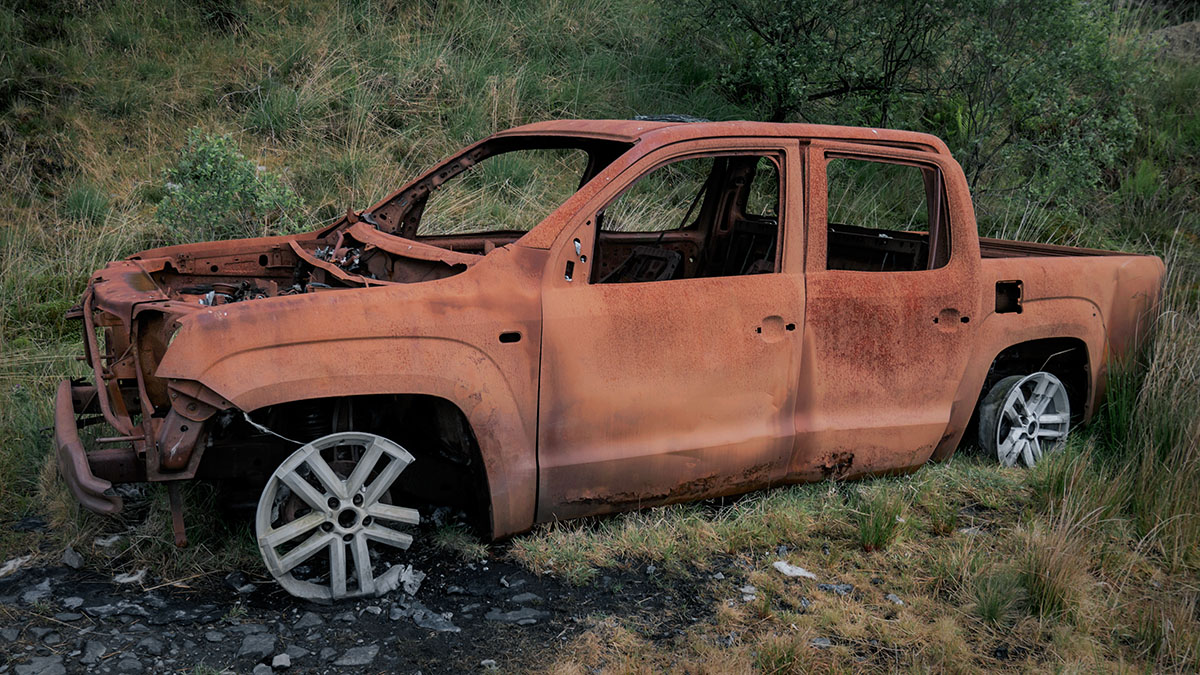
It's not all romantic wilderness, mountain-scapes, sunsets and vistas. Rusty dodgems too.
Got back to London and there's a tube strike. DIY indeed. Decided to walk home from Paddington. A near full moon over St Pauls.

Give me that old time religion, moonlight on ....

The End.
Last Updated: 22/01/26