ASTM F3340-18 R-Values Tell Us Little About A Sleeping Mat's Real-World Performance
UPDATED (21/07/26): see the changelog for details of additions and edits.
Contents
- ASTM's F3340-18 R-Value Standard
- The ASTM Working Group
- The Dynamic Sleeper
- The Cold, Cold Ground, Warming Up The Sides & An Intriguing Example
- Conclusion: The Scramble Experience
- Final Words: Some Useful Advice From On High
Introduction: The ASTM F3340-18 R-value standard
R-Value is a measure of resistance to the flow of heat through a material of a given thickness, the higher the R-Value, the better the insulation. A major driver of insulation research and testing has come from the construction / home-building sector. Importantly, insulation in homes is housed in a rather static environment largely free of dynamic forces.
In 2020 the outdoor industry adopted a new testing methodology to standardise the measure of insulation (R-Value) for sleeping mats, known as ASTM F3340-18.
Ultralight manufacturer Yamatomichi explain some key features of the ASTM F3340-18 methodology:
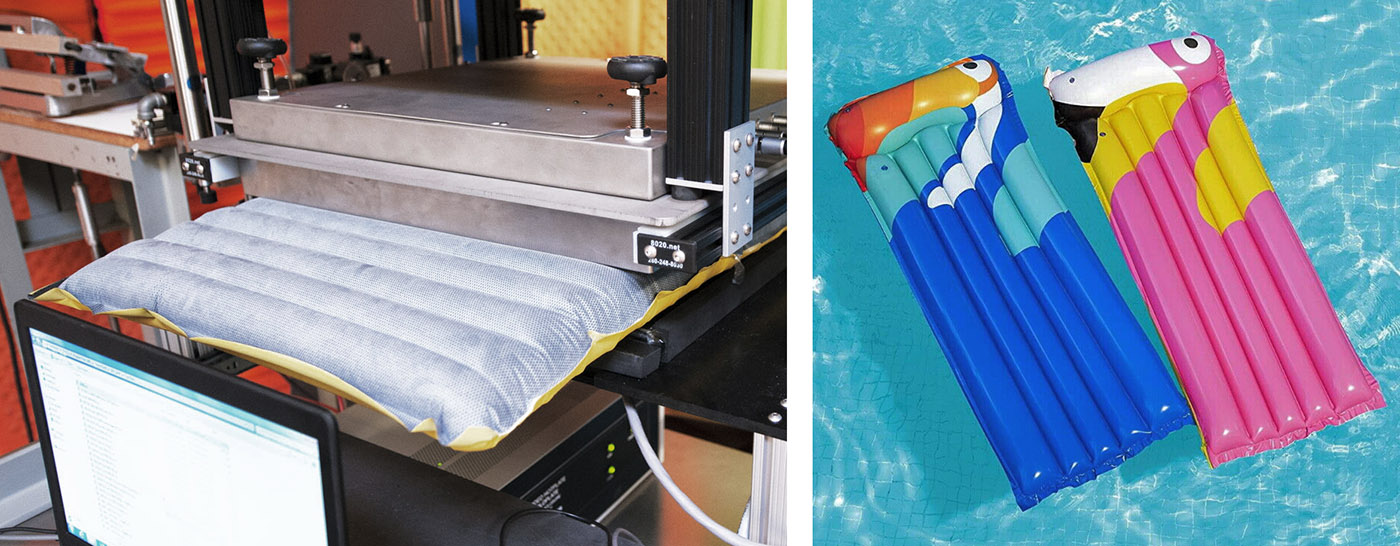
In a sealed environment at 20°C (room temperature), the pad is placed between two metal plates. The upper plate is subjected to a pressure of 2 kPa to simulate a person lying on it and is maintained at a temperature of 35°C to mimic body heat. The lower plate, representing the ground at a campsite, is kept at 5°C. The energy required to maintain the upper plate at a constant temperature is measured. This energy is then used in a formula to calculate the R-value. Pads with higher insulation require less energy and thus have a higher R-value, while pads with lower insulation need more energy, resulting in a lower R-value.
In our view, the testing protocol greatly overestimates the real-world effect of thick air beds (whether insulated with synthetic or down fill and/or with radiation reflective films and fabrics) and diminishes the real-world efficacy of closed cell foam (CCF) and open cell (memory) foam self-inflating mats. This has created a malincentive to chase ASTM R-Values (of dubious significance) by creating conveniently ultra-expensive, super-comfy, air-mattresses rather then genuine survival tools for sub zero conditions.
The ASTM Working Group
A big red flag is when the industry leaders populate the working group that creates the standard and testing protocol:
We (Cascade Designs / Thermarest) were one of the founding brands of the ASTM (American Society for Testing and Materials) Working Group which involved a variety of camping gear brands and retailers. Therm-a-Rest has always been an advocate for using R-value as the most objective way to measure the insulation of your sleeping pad.
Guess what, if I was in charge of the protocol to test beauty and intelligence, imagine how beautifully intelligent I would be "proven" to be. To be clear, we're not saying there's anything wrong with R-Value as a measure for insulation; we're simply suggesting that the current lab testing protocol is not fit for purpose.
The Dynamic Sleeper
UOG sum up the thermodynamics of sleeping mats:
When you lie down on a sleeping mat, your body heat begins to transfer to the colder ground through three primary mechanisms: conduction, convection, and radiation. A good sleeping mat counteracts all three. It reduces conduction by creating a barrier between you and the ground. It minimises convection by trapping air (in the case of inflatable and Self Inflating Mats), and some mats even reflect radiant heat to your body using unique materials, such as reflective foil.
A significant failing of the test protocol is that it doesn't account for a moving body. As we mentioned earlier, home insulation resides in a static environment whereas sleeping mats are acted upon by a dynamic force; the contoured sleeper moves in his or her sleep and is not a flat, static plate.
On the convection issue, UK Climbing point out:
The simplest air mattresses hold lots of air, but what you find sleeping on them in cool to cold temperatures is that they do not insulate well. What happens is the temperature difference between your body and the cold ground below produce convection currents inside the chambers of the mat and this circulation soon means heat is being lost from your body. So while open chamber air mattresses are comfy on rough ground they're not good at insulating you from the cold ground. I’ve found pure air mattresses to be unpleasantly cold even in temperatures in single digits but still above freezing. Companies have tried different ways to stop the circulation – either complicated interlocking chambers or insulation in open chambers; down or synthetic.
Restless bodies only increase the movement of air inside a sleeping mat's chambers (small or large, and such chambers are massive compared to the tiny spaces in closed cell or open cell foam). Manufacturers like Sea to Summit have attempted to mitigate this effect by creating small welded chambers (to reduce heat-loss via convection), then layering a reflective non-woven textile (Exkin Platinum) through the centre of the chambers to prevent radiative heat-loss to the (colder) underside of the mat. But, as we've seen, the test is conducted at room temperature (!!!), which is not exactly stress-testing such mitigation strategies.
We're not alone in our concerns around the ASTM F3340 testing protocol, as this post on BPL indicates (below is an edited version, we strongly recommend reading the full post):
Unlike the sleeping bag tests (which are more assembly based), the industry must recognize that ASTM F3340 is merely a materials based test, and must stop promoting it beyond its purpose. Even in Roger [Caffin's] 2011 market report, he clearly pointed out that fully understanding mattress performance would require systems level testing, not just materials testing. As an architect, I would never suggest to a client that their home’s habitable operating temperature can be determined simply from the R-value of a single material.
[...] At least ISO 23537 tries to consider the entire system to offer reliable comfort ranges for a sleeping bag. I think it’s high time for the industry to create systems level testing for mattresses. That way consumers may finally [get] to understand why every winter camping expert recommends CCF, and get to the bottom of the actual physics behind adding CCF on top of (or underneath) an air mattress, instead of relying simply on anecdotal experience.
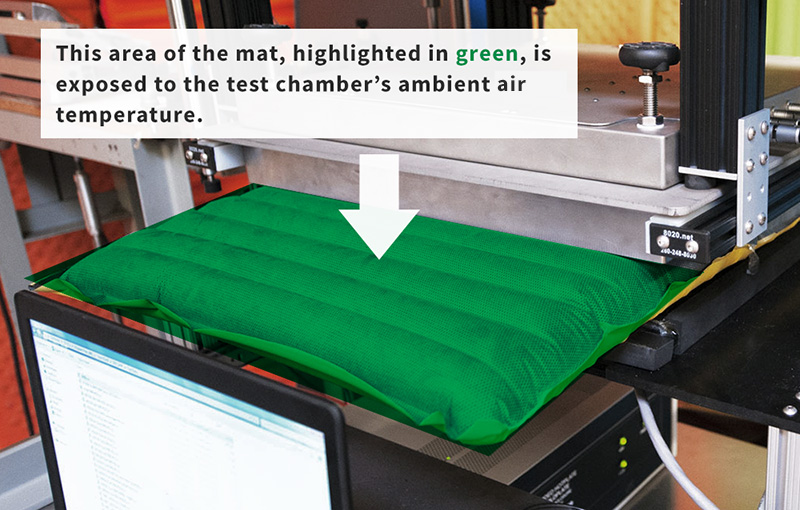
In correspondence regarding concerns about exposed surfaces in the testing chamber (see this image), the author of the above post, added:
Absolutely, but remember that ASTM F3340 is intentionally designed to create a controlled, ”neutral” environment for measuring one-dimensional, steady-state thermal resistance. What you’re describing is a very relevant question: if a thick air mattress has interconnected chambers, how much does the exposed portion of the pad thermally interact with the metering area? Then add another real-world variable: people don’t apply a uniform load. Sleeping on your side produces concentrated loading under the hips and shoulders. Roger [Caffin] highlighted this in his 2011 study, where one pad’s measured R-value dropped by more than 50% as its loaded thickness decreased from about 44 mm to roughly 14–18 mm. That illustrates how sensitive performance can be to realistic loading.
To me, that’s why the industry needs, at a minimum, an assembly-based test, and ideally a performance-based or dynamic systems test that accounts for movement, edge exposure, environmental conditions and time. ASTM F3340 is an excellent tool for measuring intrinsic R-value, but I worry that it’s increasingly being used to imply more than it was designed to measure.
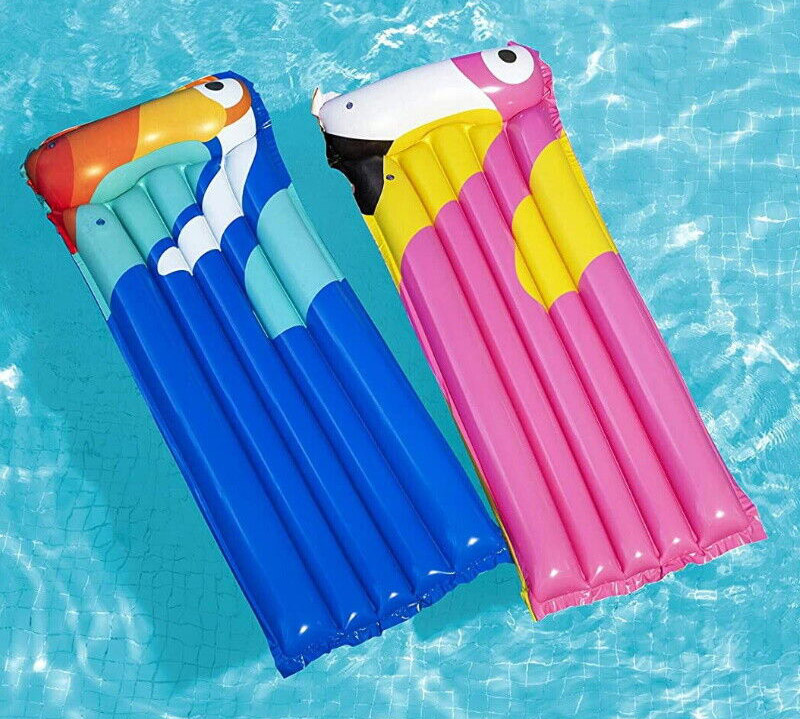
In our view, the test protocol would ideally be conducted in a much colder chamber environment, with a ground plate at or below freezing with a heated copper mannequin that rolls from side to side, like a spit-roast pig on a skewer, but pressed into the mat (we envisage something like a cross between a Henry Moore sculpture and a screw worm but in copper)... then, how quickly does the mannequin's temperature fall to X degrees or how much energy is required to keep the mannequin at X temperature? Two static flat plates at room temperature on a 5°C ground tells us little about what happens when we're out on snow covered, freezing ground, lying in a fetal position trying desperately to stay warm, because we bought a lilo pool lounger with an R-Value of 7.0.
The Cold, Cold Ground & Warming Up The Sides
The Cold Ground
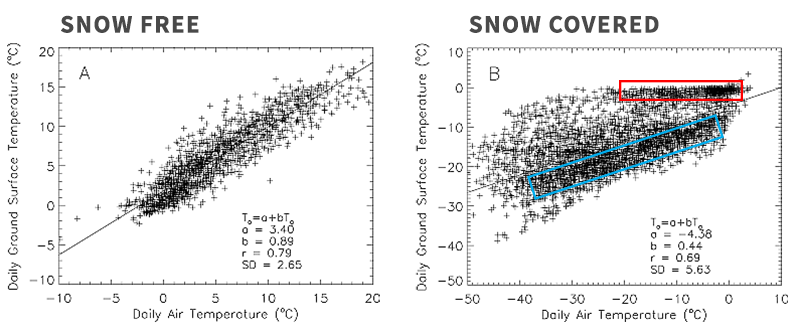
In Reviews of Geophysics, there's an interesting paper called: "Influence of the seasonal snow cover on the ground thermal regime: An overview" which looks at the correlation or lack thereof between air temperature and ground temperature on snow-free ground (figure A, below) and snow covered ground (figure B, below). Snow is an insulator, but it's also a reflector (via the albedo effect) which can often cool the snowpack and the ground below (blue box), rather than insulate it. However, from the right hand graph it's pretty clear that above -20°C there are many circumstances where snow pack is insulating the ground (red box).
That said, the paper goes on to quote Yershov's 1998 findings:
Overall, high albedo and thermal emissivity of the seasonal snow cover tend to cool the snow surface and therefore the entire snowpack and soils underneath. According to meteorological data the mean winter temperature of a snow surface may be 0.5°C to 2.0°C lower than the mean winter air temperature. [Yershov, 1998].
The relationship between air temperature, snow and ground temperature is highly complex and clearly can go either way, snow covered or not. It's also affected by vegetation, which can act as a "thermal bridge" allowing the air to cool the ground in certain conditions and warm it in others.
Snow cover is an insulator, of course, but its insulating properties vary depending on the presence of vegetation, which could act as a thermal bridge. Indeed, a study made in two sites showed that when shrubs are embedded in the snow, the heat exchange between the air and the ground is facilitated, making soil 1.2°C colder in early winter and 5°C warmer in late winter.
In general, it's fair to say, that in cold environments the air temperature can sometimes be much colder than the ground (especially with snow-cover), yet in other circumstances the ground can be significantly colder than the ambient air temperature.
Warming Up The Sides
The reason for this quick dive into air versus ground temperatures is to get us back to the ASTM F3340-18 testing methodology. We have an ambient air temperature of 20°C (room temperature). This is 15°C warmer than the ground plate (at 5°C) and only 15°C cooler than the top (body temperature) plate.
When you have thick air pads (8cm+ thick), a large surface area (untouched by the plates) is exposed to the +15°C warming effect of the ambient room temperature. This in effect means (in relation to the ground plate) the air (at room temperature) is warming the mat which the ground is attempting to cool.
In a cold environment, the ambient temperature may be for example, -10°C. Let's say it's late winter and the snow is actually insulating (more than reflecting heat) and the ground snow pack is only -2°C. Then, in this circumstance, the sides of the thick pad are being cooled more by the ambient air than the floor of the pad is by the ground. Rather than acting as a buffer (as in the ASTM test), the ambient air is sucking heat from the side surface of the thick air pad. This effect is ignored by the current test protocol. We think this may be one of the reasons thick air pads are getting inflated R-Values which don't translate to real-world, sub-zero conditions.
An Intriguing Example: Exped Ultra
Below are some key specs from Exped for their new Ultra 3R and Ultra 6.5R sleeping mats. We're looking at the Medium/Wide (MW) Mummy versions. The materials are identical, the length and width are the same. The only differences are that the Ultra 6.5R is 2cm thicker and has a reflective foil. They must have the same amount of "Texpedloft microfiber" insulation because the Ultra 6R is only 10g heavier!
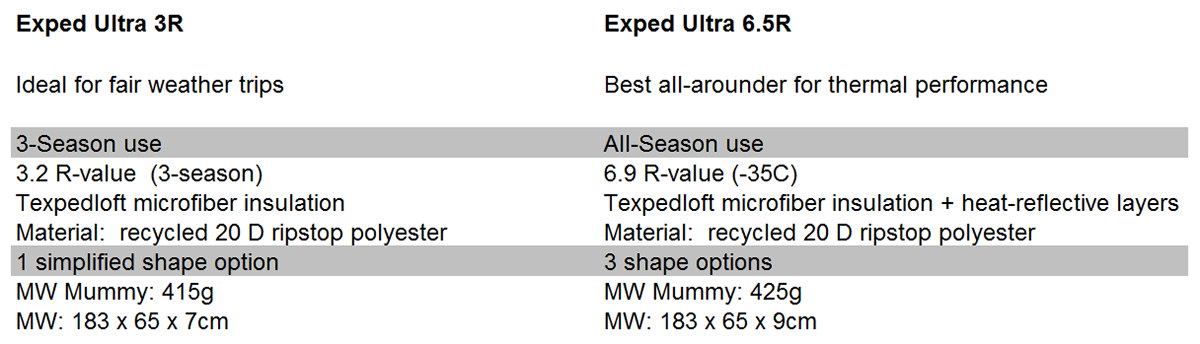
R-Values are additive. If you have a two mats, each with an R-Value of 1 laid atop oneanother, you will achieve at least an R-Value of 2. Without being too facetious, does this mean if Exped made a 2cm thick mat with no added insulation and only a reflective foil it would have a 3.7 R-Value? Because, in essence, that is what is being added to the Ultra 3R (we've just created a mat from the difference between the two) and Exped have leaped from a 3.2 R-Value to a 6.9 R-Value! Further, they tell us it's good down to -35°C. Yet this bunch of goons on reddit r/ultralight are struggling to keep warm just below freezing. Now, maybe they're all idiots and don't know what they're doing, but just a glance at the specs would suggest the ASTM testing protocol is very impressed with an extra 2cm and some reflective foil. There's a review of this pad here, where the reviewer started feeling the cold below -5°C.
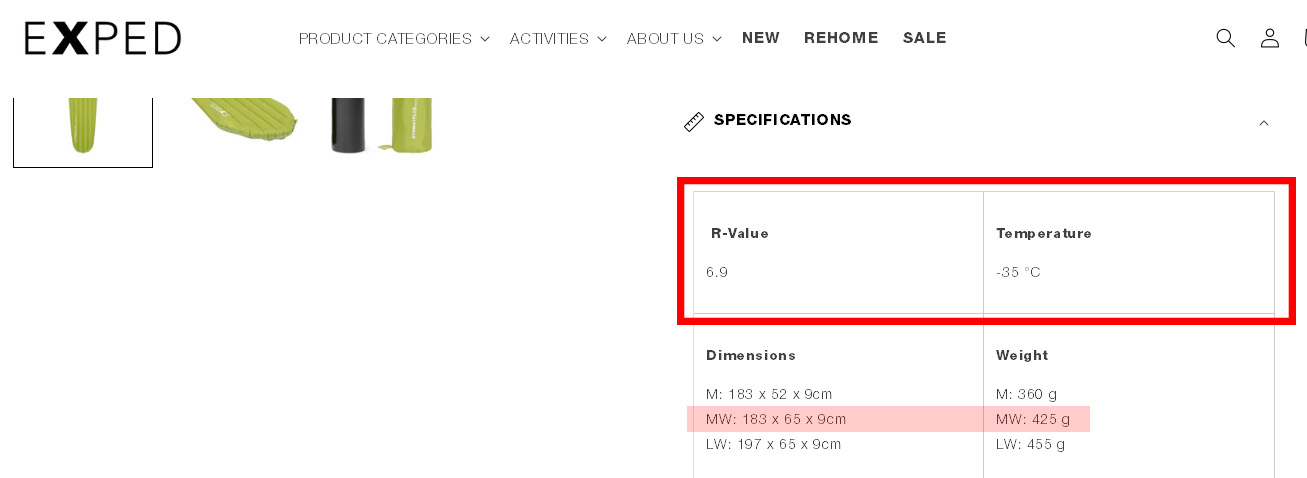 Source: https://www.expeduk.com
Perhaps, when someone takes Exped at their word, travels to Siberia for a 2 week trip in the extreme (-30°C) cold and dies from hypothermia, Exped will send their condolences. Though, they'd probably say, they should have had a warmer sleeping bag, and of course this caveat can always be true.
Conclusion: The Scramble Experience
We've come to a number of conclusions over the years of testing sleeping mats:
- Take the current ASTM F3340-18 R-Value with a large pinch of salt, especially for thick, high R-Value "insulated" air mats, and an even larger pinch of salt when comparing different types of sleeping mat's R-Values.
- Don't put all your eggs in one expensive inflatable basket.
- Since using Tyvek sleeping mat protectors, failures have come from a) weld points, b) delamination (glue), and 3) slow leaks from poorly implimented valves NONE from punctures.
- Mitigating the convection problem via a vast array of small chambers increases the number of weld-points, which in turn increases the potential points of failure.
- If you do go with an air mat, use one by Exped, Thermarest or Sea To Summit (perhaps Nemo), and do not trust the lesser brands (valve let-downs have all come from brands other than these)
- When considering cost, view air-filled sleeping pads as consumables (they fail) not long term investments.
- Closed Cell Foam (CCF) has long been the staple of high altitude mountaineers for a reason (see below).
- Many use air-mats as the primary insulator with CCF mats as additional insulation but mainly as a protective layer against punctures. We've increasingly moved toward the inverse position: to use non-inflatable CCF as the primary insulator with a modular approach to add insulation and comfort via small self-inflating "sit-mats" (by brands like Exped and Sea To Summit) - we'll be testing these combinations both underneath and atop CCF mats.
We would love to have Multimat's 38mm Expedition Summit Compact 38S mat tested with the latest ASTM setup. Personally, I've been toasty with this mat down to -12°C (10.4°F) and others in the Scramble team, quite a bit below that. But my guess is, that its current ASTM R-Value would be in the 4s (at best), indicating it's more of a warm 3-season mat. Just a guess, but that's the difference people are discovering between the real world vs. the fantasy brought to you by ASTM F3340-18.
Finally, we've written this so readers will understand why the outdoor industry has failed to create a distinct product that, in good conscience we can recommend as a replacement for Multimat's excellent Expedition Summit Compact 38S Self-Inflating Sleeping Mat and why we're testing an approach which is antithetical to the industry's current dogma; a dogma and direction driven in our view by a test that is providing near-meaningless measures.
Now, if we were good little consumers, we'd simply shut up and shell out the £190 (RRP) for a 9cm thick, 357g (ex bag) Exped Ultra 6.5R M Mummy Sleeping Mat with an R-Value of 6.9 and sing our praises to Exped for the extra warmth, comfort and appoximate 150g saving compared to Multimat's discontinued Expedition Summit we once admired.
But here's a thought ...
Final Words: Some Useful Advice From On High
Interestingly, we've come to a strikingly similar conclusion to this group of high altitude mountaineers in their post on High Altitude Alpine Style Sleeping Systems (perhaps for slightly different reasons, but what do they know that Exped and Thermarest aren't telling us?):
Use A Smaller Mat
Don’t be the climber messing about trying to inflate a full sized sleeping matby mouthat 7500m whilst everyone waits in the cold, it’s irresponsible and dangerous. Redundancy demands you carry at least half your sleeping mat in puncture-proof foam, so combining that with a small self-inflating (i.e. foam cored) mat – with the closed cell foam on top, takes just a few breaths and gets you in the tent and out of the weather fast.
The lower half of you gets insulated with your pack – now empty since your (down) suit, (sleeping) bag and food has been taken out.
Last Updated: 21/07/26
21/07/26: Added a further quote to "The Dynamic Sleeper" section from MD @ BPL (via correspondence) on what a valid test would entail.
20/07/26: Replaced the recently added link (19/07/26) in the introduction and instead quoted part of that post in section 3, "The Dynamic Sleeper".
19/07/26: Added a link in the introduction to an excellent post by an architect and BPL member regarding the construction industry's system level approach to insulation testing.
18/07/26: Added the example of Exped's Ultra 3R vs 6.5R.
17/07/26: Major update removing the Reddit (r/ultralight) post (which some confused with our own stance) and replacing it with "The Cold, Cold Ground & Warming Up The Sides" section, discussing ground versus air temperatures and the ASTM testing protocol's ambient temperature and its positive results for thick air beds.