From "Chasing R-Values, The Malincentive of ASTM F3340-18"
Section: The Dynamic Sleeper
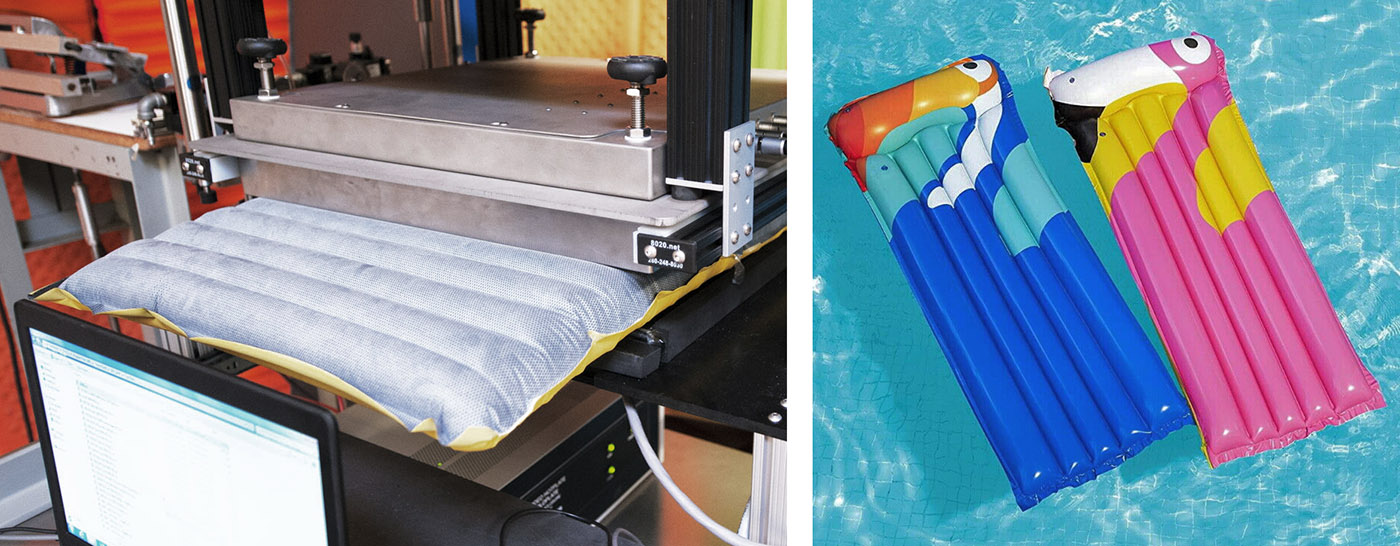
Restless bodies only increase the movement of air inside a sleeping mat's chambers (small or large, and such chambers are massive compared to the tiny spaces in closed cell or open cell foam). Manufacturers like Sea to Summit have attempted to mitigate this effect by creating small welded chambers (to reduce heat-loss via convection), then layering a reflective non-woven textile (Exkin Platinum) through the centre of the chambers to prevent radiative heat-loss to the (colder) underside of the mat. But, as we've seen, the test is conducted at room temperature (!!!), which is not exactly stress-testing such mitigation strategies (more on this later).
In our view, the test protocol would ideally be conducted in a much colder chamber environment, with a ground plate at or below freezing with a heated copper mannequin that rolls from side to side, like a spit-roast pig on a skewer, but pressed into the mat (we envisage something like a cross between a Henry Moore sculpture and a screw worm but in copper)... then, how quickly does the mannequin's temperature fall to X degrees or how much energy is required to keep the mannequin at X temperature? Two static flat plates at room temperature on a 5°C ground tells us little about what happens when we're out on snow covered, freezing ground, lying in a fetal position trying desperately to stay warm, because we bought a lilo pool lounger with an R-Value of 7.0.